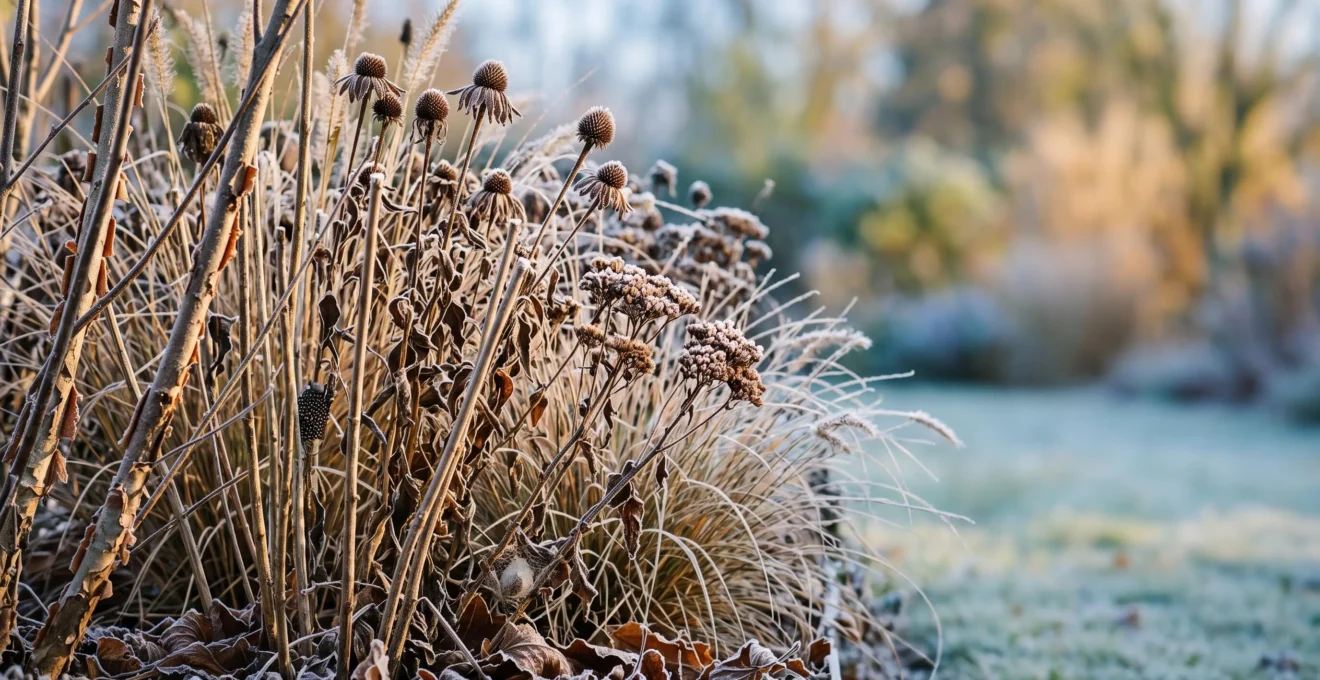
The common urge to “tidy up” the garden for winter is inadvertently destroying the essential homes and food sources of your most beneficial wildlife.
- Leaving structural stems and leaf litter provides critical insulation and food for hibernating insects and wintering birds.
- However, a blanket “leave-it-all” approach can create a reservoir for fungal diseases like rose black spot.
Recommendation: The key is to practice *strategic neglect*—learning what to leave, what to selectively remove, and when to perform the final cleanup in spring based on temperature cues, not the calendar.
There is a deep, primal satisfaction in the autumn garden cleanup. The crisp air, the rustle of leaves, the final act of putting the garden ‘to bed’ for winter, leaving behind neat, bare soil. It feels responsible, clean, and correct. For generations, this has been the unquestioned ritual of the diligent gardener, a sign of a job well done. We are taught that tidiness prevents pests and diseases and sets the stage for a clean start in spring. This drive to sanitize our outdoor spaces is powerful.
But what if this deep-seated need for order is causing unseen harm? As a wildlife trust officer, I see the downstream effects of this annual tidying. While the advice to “leave the leaves” or let seed heads stand for birds has become more common, it often lacks the crucial ‘why’ and ‘how’. This can lead to confusion, or worse, new problems. A blanket ‘no-cleanup’ rule can be just as detrimental as a sterile one, creating a haven for the very diseases we seek to avoid. The truth is far more nuanced and fascinating.
The secret lies not in abandoning tidiness altogether, but in transforming our perspective. We must move from being janitors of our gardens to becoming architects of a thriving winter ecosystem. This isn’t about letting things go; it’s about making deliberate, informed choices. It’s about understanding the ecological mechanics at play in every hollow stem and curled leaf. The real key is embracing a philosophy of strategic neglect—knowing precisely what to leave, what to remove, and when to act, all to support the tiny, vital allies that ensure a healthy garden next year.
This guide will move beyond the simple platitudes and equip you with that strategic knowledge. We will explore the specific caloric value of different seed heads, the thermal architecture of dead foliage, the aesthetic beauty of a frosty winter garden, and the critical distinction between a beneficial mess and a disease-harbouring one. By the end, you will see your winter garden not as a dormant wasteland, but as a bustling, life-sustaining sanctuary.
To help you navigate these crucial decisions, this article breaks down the core principles of creating a wildlife-friendly winter garden. The following sections detail everything from providing high-energy food sources to understanding the natural processes that enrich your soil over the colder months.
Summary: A Strategic Guide to Winter Garden Ecology
- Which Seed Heads Provide the Most Calories for Winter Birds?
- How to Use Dead Foliage to Insulate Tender Crowns Naturally?
- Frost on Grasses: Designing for the ‘Golden Hour’ in Winter
- The ‘Leave it All’ Mistake That Harbours Black Spot Spores
- When to Cut Back: The Temperature Signal for Safe Cleanup
- Log Piles or Bug Hotels: Which Actually Works for Lacewings?
- Why Herbaceous Stems Collapse and How It Feeds the Soil?
- How to Attract Beneficial Insects to Eat 90% of Your Aphids?
Which Seed Heads Provide the Most Calories for Winter Birds?
The common advice to “leave seed heads for birds” is a wonderful starting point, but not all seed heads are created equal. In the depths of winter, birds aren’t just looking for a snack; they need high-energy, fat-rich foods to survive freezing temperatures. Your garden can become a crucial refuelling station if you prioritize plants that offer the highest caloric value. Think of it as stocking a larder with energy bars, not just rice cakes. The goal is to provide a reliable food source that persists through wind, rain, and snow.
Plants from the Asteraceae family are powerhouses in this regard. Species like Coneflower (Echinacea) and Black-Eyed Susan (Rudbeckia) have robust, cone-like structures that hold their seeds securely, making them accessible to birds like goldfinches, cardinals, and chickadees long after other, more delicate seed heads have shattered. It’s particularly useful to know that for a long-term supply, gardeners should prioritize species like Rudbeckia fulgida, a sturdy perennial, over the shorter-lived Rudbeckia hirta, which may not provide the same multi-season reliability.
Beyond just the seeds, some plants offer a dual benefit. Joe Pye Weed, for instance, provides not only seeds for birds but also fluffy material that they can use for insulating their nests. By making a conscious selection of these high-performance perennials, you transform your garden from a pretty but barren winter landscape into a life-sustaining habitat that supports a vibrant bird population through the toughest months of the year.
Your Action Plan: Prioritizing High-Calorie Seed Heads
- Leave coneflower (Echinacea) heads standing; goldfinches and cardinals feed on the exposed cones.
- Keep Rudbeckia (black-eyed Susan) seed heads intact through winter for finches, nuthatches and chickadees.
- Retain Joe Pye Weed seed heads, which provide both seeds and fluff for nest-building birds.
- Prioritize Rudbeckia fulgida over shorter-lived Rudbeckia hirta for the most reliable multi-season seed supply.
- Observe which birds visit which plants in your garden to refine your planting choices for next year.
How to Use Dead Foliage to Insulate Tender Crowns Naturally?
That blanket of fallen leaves you’re so tempted to rake up is one of nature’s most perfect inventions: a free, breathable, and highly effective insulating layer. This is not just ‘mess’; it is a form of thermal architecture. The structure of curled, overlapping leaves traps pockets of air, creating a buffer that shields the delicate crowns of perennial plants and the roots of shallow-rooted shrubs from the damaging effects of freeze-thaw cycles. This natural mulch moderates soil temperature, prevents frost heave, and conserves moisture.
The scientific principle behind this is surprisingly robust. A materials-science study on the insulating properties of leaf litter found it performs remarkably well, with a thermal conductivity (λ) of 0.041–0.046 W/m·K, a value comparable to some commercial insulation materials. However, just as with seed heads, not all leaves are equal. The type of leaf matters immensely for both insulation and longevity. A multi-year US Forest Service study on leaf litter decomposition provides a clear directive for gardeners.
The study found that oak leaves, with their high tannin content, decompose much more slowly than leaves from trees like maple. As you can see in the image, the curled, sturdy structure of oak leaves is ideal for creating long-lasting, air-trapping pockets. This makes them a superior choice for a winter mulch that needs to last until spring. Maple leaves, by contrast, break down quickly, which is great for composting but less effective for season-long insulation. By simply choosing to rake tougher, slower-to-rot leaves like oak or beech around the base of vulnerable plants like Agapanthus or tender ferns, you are harnessing a powerful, natural tool for garden resilience.
Frost on Grasses: Designing for the ‘Golden Hour’ in Winter
Embracing a less tidy winter garden isn’t just an ecological choice; it’s an aesthetic one. The winter garden possesses a subtle, structural beauty that is often overlooked in our rush to clear everything away. One of the most magical elements of this dormant-season aesthetic is the effect of frost on the skeletal remains of ornamental grasses and perennials. Leaving these structures standing is a deliberate act of designing for winter interest.
The low, golden light of a winter morning or late afternoon can transform a garden. This ‘golden hour’ catches the intricate details of frosted seed heads and stems, turning them into glowing, ethereal sculptures. Grasses like Miscanthus, Panicum, and Pennisetum, with their persistent plumes and upright habits, are particularly spectacular. Their fine textures catch every ice crystal, creating a shimmering, backlit display against the low sun. This is a quiet, transient beauty that you can only experience if you resist the urge to cut them back in autumn.
Planning for this effect involves thinking about placement. Site your best winter grasses where they will be backlit by the rising or setting sun from your primary viewing points, such as a kitchen window. The contrast of their pale, frosty forms against a dark background, like an evergreen hedge, can be breathtaking. This isn’t about celebrating decay; it’s about appreciating the beauty of structure, form, and light in a season often dismissed as bleak. It connects your garden to the natural cycles of the year and provides a profound sense of place, even on the coldest days.
The ‘Leave it All’ Mistake That Harbours Black Spot Spores
Here we arrive at the most critical nuance of ‘strategic neglect’. While leaving stems and leaves is broadly beneficial, a completely hands-off approach can be disastrous. Certain plant debris acts as a primary pathogen reservoir, allowing diseases to overwinter and emerge with explosive force in the spring. The most notorious example of this is rose black spot (Diplocarpon rosae), a fungal disease that can devastate rose bushes.
The advice to leave all fallen leaves on the ground is dangerous when applied to disease-prone species. A survey of rose diseases found that black spot affected susceptible varieties with an incidence rate of over 90% in unsprayed conditions, demonstrating its pervasive nature. The key to managing this lies in understanding its life cycle. The Royal Horticultural Society, a leading authority on plant health, provides a stark warning about this.
The fungus spends the winter on fallen leaves and also in dormant infections on young stems and buds, producing spores in the spring to infect young foliage.
– RHS (Royal Horticultural Society), RHS Advice, Rose black spot: Symptoms & Control
This is the essence of strategic cleanup. You MUST remove and destroy (do not compost) the fallen leaves from around your roses. The same principle applies to other specific diseases, such as peony wilt or iris leaf spot. The goal is to surgically remove the known sources of infection while leaving the broader, beneficial structure of the garden intact. This is not a contradiction; it is a higher level of garden care that balances the needs of wildlife with the principles of plant hygiene. It means learning to identify the 10% of debris that causes 90% of the problems and dealing with it decisively.
When to Cut Back: The Temperature Signal for Safe Cleanup
So you’ve successfully left your stems and leaves all winter, providing crucial habitat. Now comes the most nerve-wracking question: when is it safe to finally “tidy up” in the spring without evicting or harming the very creatures you’ve been protecting? The answer, once again, is not found on a calendar. Arbitrary dates like “the first weekend of March” are meaningless. The real signal is provided by nature itself: sustained ambient temperature.
Many of our most important beneficial insects, particularly solitary bees like mason bees, have their emergence timed to temperature cues. They have spent the winter as pupae inside the hollow stems of plants like raspberries, fennel, or teasel. Cutting these stems down too early is a death sentence. Pollinator experts note that mason bees typically emerge once temperatures reach 50–55°F (10–13°C) for a sustained period. This isn’t a single warm afternoon; it’s a consistent trend of warmer days that signals to the bees that spring has truly arrived and food sources will be available.
A climate-chamber study on mason bees highlights the danger of mis-timing. The research, focused on the effects of overwintering temperatures, found that while bees in artificially warmer conditions emerged earlier, they did so with a lower body weight, potentially impacting their survival and reproductive success. This underscores why a natural, sustained warm spell is the only reliable trigger. The safest rule of thumb for the wildlife-conscious gardener is to wait until you have seen at least five to seven consecutive days where the daytime temperature consistently rises above 10°C (50°F). Only then should you consider cutting back the old herbaceous stems. And even then, you can go a step further by loosely bundling the cut stems and leaving them in a quiet corner for a few more weeks, just in case any late-sleepers are still inside.
Log Piles or Bug Hotels: Which Actually Works for Lacewings?
In the quest to provide winter habitat, the “bug hotel” has become an iconic, and highly marketable, solution. These neat, geometric structures are sold as a panacea for declining insect populations. While well-intentioned, their effectiveness can be limited and often pales in comparison to a more natural, “messy” alternative: the humble log pile. The two structures offer fundamentally different environments, and understanding this difference is key to supporting a wider range of beneficial insects, especially predators like lacewings.
A typical bug hotel, with its drilled holes and bamboo canes, primarily offers nesting sites for certain solitary bees, like mason bees or leafcutter bees. This is valuable, but it is a very specific type of habitat. A log pile, by contrast, is a complex, dynamic micro-ecosystem. It offers a multitude of niches: loose, flaking bark for hibernating ladybirds and lacewings; damp, decaying wood for beetle larvae; dry, hollow cavities for queen bumblebees; and a food source for countless decomposers. It is this structural complexity that makes it so much more valuable to a broader community of invertebrates.
For lacewings, whose larvae are voracious aphid-eaters, the nooks and crannies under the bark of a log pile provide the perfect sheltered spot to spend the winter. They are unlikely to use the clean, drilled holes of a bug hotel. The same goes for centipedes and ground beetles, other key predators that prefer the damp, dark conditions at the base of a log pile. So while a bug hotel can be a fine addition to a garden, it should never be seen as a substitute for the rich, multi-layered habitat provided by a simple, out-of-the-way pile of logs, branches, and woody prunings. The more organic and “messy” the structure, the more life it will ultimately support.
Why Herbaceous Stems Collapse and How It Feeds the Soil?
As autumn transitions into winter, the once-sturdy stems of herbaceous perennials begin to bend, fold, and eventually collapse to the ground. This process can look untidy to the discerning gardener, but it is a vital part of the garden’s natural life cycle. This structural failure is not a sign of neglect; it is the first step in a critical process of nutrient recycling. Understanding the ecological mechanics of this collapse reveals how leaving stems in place directly feeds the soil food web.
When a stem collapses, it creates a new micro-environment at the soil surface. The fallen material acts as a small-scale mulch, suppressing winter weeds and, more importantly, providing food and shelter for a host of decomposer organisms. Earthworms, woodlice, millipedes, and a universe of microscopic fungi and bacteria get to work. They begin breaking down the tough, carbon-rich cellulose and lignin in the stems. This is not a fast process, but it is a steady one that unfolds throughout the winter and into the spring.
As these organisms digest the plant matter, they release the nutrients that were locked within the stems—nitrogen, phosphorus, potassium, and essential micronutrients—back into the soil in a bioavailable form. This slow-release fertilization is perfectly timed for the plant’s own renewed growth in the spring. Furthermore, the activity of these decomposers improves soil structure, creating channels for air and water and increasing the soil’s organic matter content. By cutting back and removing all this material, we interrupt this elegant, self-sustaining cycle. We are essentially exporting fertility from our garden beds, which we then have to re-import through composts and fertilizers. Leaving stems to collapse is simply allowing the garden to feed itself.
Key Takeaways
- Hollow stems and leaf litter are not ‘mess’; they are vital overwintering architecture for beneficial insects.
- Strategic cleanup is key; remove disease-prone debris (like rose leaves) while leaving structural elements intact.
- Timing is everything. Wait for several consecutive days of warm spring temperatures (above 10°C/50°F) before the final cut-back to allow insects to emerge safely.
How to Attract Beneficial Insects to Eat 90% of Your Aphids?
The ultimate goal of a wildlife-friendly garden is to create a self-regulating ecosystem where pests are kept in check by a thriving population of natural predators. A staggering amount of pest control can be achieved for free, simply by providing the right habitat for beneficial insects like ladybirds, lacewings, and hoverflies. And the single most important habitat you can provide for many of these allies is the one we are most often compelled to destroy: the layer of fallen leaves and standing stems.
As the Xerces Society, a global leader in invertebrate conservation, explains, this connection is direct and non-negotiable for many species’ survival. The aphid-munching predators you rely on in summer don’t just disappear in winter; they need a safe place to hibernate.
These beneficial insects need fallen leaves to survive the winter, and actually benefit from having at least a few pest insects around to eat.
– Xerces Society, Xerces Society Blog, Leave the Leaves for Natural Pest Control
This doesn’t mean your garden must be buried under a mountain of leaves. It’s about finding a balance that works for you and for wildlife. Many successful gardeners adopt a hybrid approach. One gardener shared a practical and relatable strategy that embodies this balance perfectly:
I only shred about half of the leaves that I’ve collected from my neighbor’s bagged leaves destined for the landfill and store the rest in my leaf corral until spring, allowing the insects to survive.
This ‘shred some, save some’ approach is brilliant. Shredded leaves make a fantastic, fast-decomposing mulch for beds, while the whole, unshredded leaves piled in a corner or under shrubs provide the essential, undisturbed habitat that overwintering insects desperately need. By providing this winter shelter, you are ensuring that a ready army of predators is present in your garden from the very first signs of spring, ready to tackle aphids before their populations can explode.
Now that you understand the ‘why’ behind the ‘what’, your next step is to walk through your garden not as a tidier, but as a habitat architect. Begin today by identifying just one area where you can practice strategic neglect for the benefit of your unseen allies, ensuring a healthier, more resilient garden for the year to come.