Problems and solutions
Every gardener, whether tending a small balcony herb collection or managing an extensive vegetable plot, inevitably encounters challenges. Plants communicate distress through yellowing leaves, stunted growth, mysterious spots, or wilting stems. Understanding these signals transforms frustration into confidence, turning problems into opportunities for deeper horticultural knowledge.
The key to successful gardening isn’t avoiding problems altogether—it’s developing the ability to diagnose issues accurately and respond effectively. This foundational knowledge empowers you to recognize whether your tomato plant suffers from a fungal disease, nutrient deficiency, or simply irregular watering. Armed with this understanding, you’ll make informed decisions rather than guessing, saving both time and beloved plants.
This resource explores the most common garden problems across five critical categories: pest invasions, plant diseases, soil and nutritional issues, watering challenges, and environmental stress factors. Each section provides practical diagnostic clues and actionable solutions to help you cultivate healthier, more resilient plants.
Identifying and Managing Common Garden Pests
Pests represent one of the most visible garden challenges. Unlike diseases that develop gradually, pest damage often appears suddenly—chewed leaves, sticky residue, or visible insects signal an unwelcome visitor has discovered your plants.
The most frequently encountered garden pests include aphids, which cluster on tender new growth and leave behind honeydew residue; spider mites, nearly invisible but identifiable by fine webbing and stippled leaves; caterpillars that create irregular holes in foliage; slugs and snails that leave characteristic slime trails and ragged leaf edges; and whiteflies that form clouds when disturbed. Each pest has distinct feeding patterns that serve as diagnostic fingerprints.
Effective pest management follows an integrated approach rather than relying solely on chemical interventions. Start with early detection through regular plant inspection—examining leaf undersides, stem junctions, and soil surface weekly. Physical removal works remarkably well for larger pests: handpicking caterpillars or hosing off aphids with water provides immediate relief. Introducing beneficial insects like ladybugs, lacewings, or parasitic wasps creates natural population control. Think of your garden as an ecosystem rather than a battlefield—balance matters more than elimination.
For persistent infestations, consider targeted organic solutions such as neem oil, insecticidal soaps, or diatomaceous earth. These options address specific pests while minimizing harm to beneficial organisms. The timing and method of application significantly impact effectiveness, so always identify your pest accurately before treating.
Recognizing Plant Diseases and Their Symptoms
Plant diseases often puzzle gardeners because symptoms can resemble other problems. A yellowing leaf might indicate disease, nutrient deficiency, or watering stress. Learning to recognize disease-specific patterns transforms this confusion into clarity.
Fungal diseases represent the majority of plant health issues. Powdery mildew appears as white, talcum-like coating on leaves, thriving in humid conditions with poor air circulation. Blight causes brown or black spots that spread rapidly, often accompanied by wilting. Root rot, developing in waterlogged soil, manifests as yellowing leaves, stunted growth, and mushy, dark roots—by the time above-ground symptoms appear, root damage is often extensive.
Bacterial infections typically create water-soaked spots on leaves, sometimes with yellow halos. These lesions may ooze in humid weather. Bacterial diseases spread through water splash, contaminated tools, or insect vectors, making sanitation crucial for prevention.
Viral diseases, though less common in home gardens, produce distinctive symptoms: mosaic patterns on leaves, stunted or distorted growth, and unusual color breaks in flowers. Viruses typically spread through insect vectors or propagation from infected plant material. Unfortunately, viral infections have no cure—removal and disposal prevent spread to healthy plants.
Prevention outweighs cure for plant diseases. Ensure adequate spacing for air circulation, water at soil level rather than overhead, remove diseased material promptly, and rotate crops annually in vegetable gardens. Consider disease-resistant varieties when selecting new plants—this single choice eliminates many future headaches.
Solving Soil and Nutrient Deficiency Problems
Healthy soil forms the foundation of thriving plants, yet soil problems often go unnoticed until plants show obvious distress. Understanding soil composition and nutrient availability helps you address the root cause rather than treating symptoms.
Plants require three primary macronutrients in substantial quantities: nitrogen (N) for leafy growth, phosphorus (P) for root development and flowering, and potassium (K) for overall plant vigor and disease resistance. Deficiency symptoms follow predictable patterns. Nitrogen deficiency causes older leaves to turn pale yellow while newer growth remains green—the plant redirects limited resources to young tissue. Phosphorus deficiency produces purple or reddish tints, particularly on leaf undersides and stems, with stunted root systems. Potassium deficiency appears as yellowing or browning leaf edges, called marginal scorch, starting with older foliage.
Secondary nutrients and micronutrients—including calcium, magnesium, iron, and manganese—play equally important roles despite smaller requirements. Iron deficiency creates interveinal chlorosis, where leaf veins remain green while tissue between them yellows, typically affecting new growth first. This often occurs in alkaline soils where iron becomes chemically unavailable even when present.
Before adding fertilizers or amendments, consider conducting a soil test. This inexpensive analysis reveals precise pH levels and nutrient concentrations, enabling targeted corrections rather than guesswork. Soil pH dramatically affects nutrient availability—most garden plants thrive between 6.0 and 7.0 pH, where nutrients remain accessible. Acidic soil (below 6.0) may lock up phosphorus and calcium, while alkaline soil (above 7.5) often renders iron and manganese unavailable.
Improving soil structure matters as much as adding nutrients. Incorporating organic matter—compost, aged manure, or leaf mold—enhances drainage in clay soils while improving water retention in sandy soils. Think of organic matter as a soil conditioner that creates optimal conditions for both plant roots and beneficial microorganisms.
Addressing Watering Problems: Too Much or Too Little
Watering represents perhaps the most common source of plant problems, yet ironically, both overwatering and underwatering produce remarkably similar symptoms. Distinguishing between these opposite problems requires observation and understanding of plant water dynamics.
Underwatering causes leaves to wilt, droop, and eventually turn brown and crispy, starting at leaf tips and margins. Soil pulls away from container edges, feeling dry several inches below the surface. Plants may drop leaves prematurely to reduce water loss. Recovery happens relatively quickly once water is provided—wilted leaves perk up within hours.
Overwatering also causes wilting, but with a crucial difference: soil remains soggy, and roots begin to rot from oxygen deprivation. Leaves may turn yellow and drop, new growth appears stunted, and a sour smell might emanate from soil. Unlike drought stress, overwatered plants don’t recover immediately when watering stops—root damage requires time to heal.
The finger test provides a simple diagnostic tool: insert your finger two inches into the soil. Dry soil indicates watering need; moist soil suggests patience. For containers, weight offers another clue—lift the pot to gauge moisture content, as dry soil weighs considerably less than wet soil.
Effective watering follows these principles:
- Water deeply but infrequently to encourage deep root growth rather than shallow, frequent watering that creates surface-dependent roots
- Apply water early morning when evaporation rates are lowest and foliage has time to dry before evening
- Adjust frequency based on weather, season, and plant maturity—young transplants require more frequent attention than established plants
- Ensure containers have drainage holes and use well-draining potting mix rather than garden soil
Different plants have different water requirements. Succulents and cacti tolerate drought; ferns and tropical plants prefer consistent moisture. Matching watering practices to plant needs prevents many common problems.
Managing Environmental Stress Factors
Environmental conditions—light, temperature, humidity, and wind—profoundly affect plant health. When these factors fall outside a plant’s comfort range, stress symptoms emerge even when pests, diseases, and watering are managed perfectly.
Light stress manifests differently depending on whether plants receive too much or too little. Insufficient light causes leggy growth with elongated stems, pale leaves, and poor flowering. Plants literally stretch toward light sources, becoming weak and spindly. Conversely, excessive light, particularly intense afternoon sun, scorches leaves creating bleached or brown patches, especially on shade-loving plants suddenly exposed to full sun.
Temperature extremes damage plants in predictable ways. Cold stress causes blackened, water-soaked foliage that turns mushy—frost damage. Heat stress produces wilting even in moist soil, leaf curl, blossom drop, and scorched leaf margins. Many plants have specific temperature thresholds: tomatoes, for instance, drop flowers when nighttime temperatures exceed 75°F (24°C) or fall below 55°F (13°C).
Humidity levels affect transpiration rates and disease susceptibility. Low humidity causes leaf tip browning, particularly in tropical plants adapted to moist air. High humidity promotes fungal diseases and creates conditions where plants struggle to transpire efficiently. Indoor plants often suffer from dry air during heating seasons, while outdoor plants in humid climates face increased disease pressure.
Wind damage appears as tattered leaves, broken stems, or one-sided growth patterns. Constant wind increases water loss through transpiration, potentially causing drought stress even in moist soil. Providing windbreaks or staking vulnerable plants prevents mechanical damage.
Addressing environmental stress often requires adjusting plant placement rather than changing the plant. Moving shade-lovers to filtered light, providing frost protection during cold snaps, or increasing humidity around tropical houseplants creates conditions where plants naturally thrive. Remember: the right plant in the right place rarely experiences environmental stress.
Understanding garden problems transforms reactive gardening into proactive plant care. By recognizing the distinct signals plants send—whether pest damage patterns, disease symptoms, nutrient deficiency signs, watering stress indicators, or environmental stress responses—you develop the diagnostic skills that separate struggling gardens from flourishing ones. Each challenge you successfully navigate builds knowledge and confidence, creating a positive cycle where observation, understanding, and appropriate action become second nature. Your garden becomes not just a collection of plants, but a living classroom where every problem solved deepens your connection to the natural world.
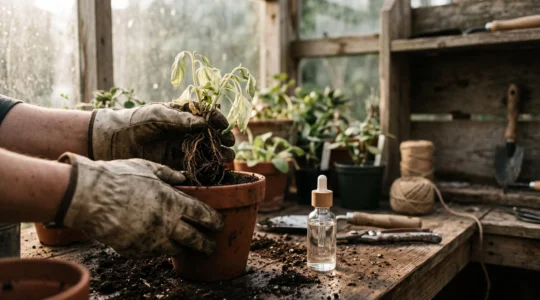
Preventing Fatal Root Rot: The Hydrogen Peroxide Rescue Technique
When a plant is wilting in wet soil, it’s suffocating from root rot, and you must act as a plant paramedic, not just a gardener. The sour smell of the soil is a definitive sign of anaerobic decay, confirming the…
Read more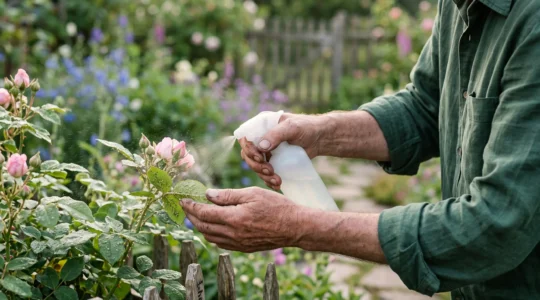
Controlling Aphid Infestations: Water Jets vs Soap Sprays?
In summary: Effective aphid control is not about a single spray, but a strategy that understands aphid biology and their alliances. You must first break the partnership between ants and aphids, as ants will protect aphids from predators. Using the…
Read more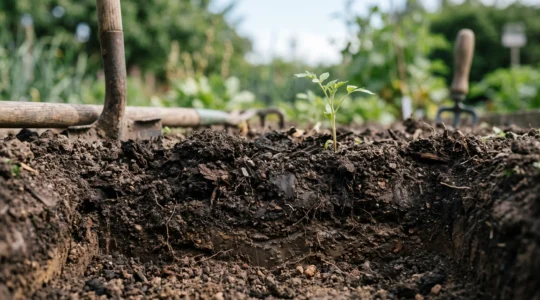
Managing Persistent Fungal Infections: Breaking the Spore Cycle in Soil
Stopping persistent garden diseases like blight and black spot requires a strategic shift from seasonal reactions to a multi-year campaign against soil-borne inoculum. Pathogen spores can survive for several years in soil, making simple garden cleanup insufficient for long-term control….
Read more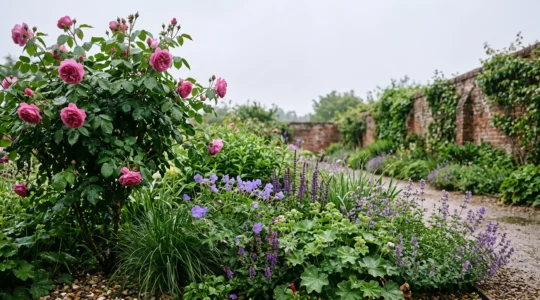
How to Prevent Foliar Diseases in Damp UK Gardens Without Fungicides?
In summary: Fungal prevention in damp climates is not about chemical sprays, but about proactively engineering a garden’s microclimate to be hostile to pathogens. Success depends on three pillars: managing leaf wetness duration, maximising canopy air circulation, and rigorously breaking…
Read more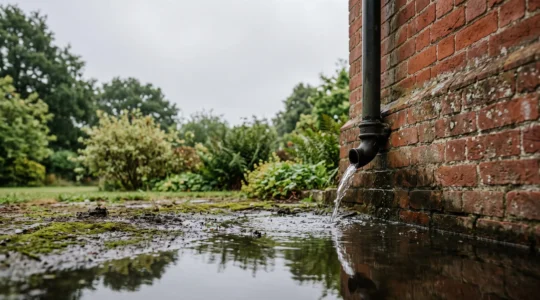
Foundation Water Stagnation: The Hidden Cause of Rising Damp in Period Homes
Contrary to common belief, persistent damp in period properties is rarely a failure of the original structure; it is almost always caused by external ground level mistakes that concentrate water against the foundations. High ground levels from modern flower beds…
Read more
A Groundworker’s Guide to Fixing Lawn Grading and Stopping Winter Waterlogging
In summary: Your waterlogged lawn is a structural problem, not a gardening one. The issue lies in the subgrade, compaction, and slope. A minimum slope is non-negotiable for shedding surface water away from structures and preventing pooling. Diagnose before you…
Read more
Garden Privacy Without a Legal Battle: A UK Homeowner’s Guide
The most effective garden privacy screen isn’t the tallest or fastest-growing; it’s the one that is legally defensible and respects your neighbour’s right to ‘reasonable enjoyment’ of their property. Privacy planting is a legal act, governed by principles of nuisance,…
Read more