Ecology and sustainability
Every garden, no matter its size, functions as a miniature ecosystem—a living network where plants, soil organisms, insects, and wildlife interact in complex ways. Understanding the ecological principles that govern these relationships transforms gardening from a simple hobby into a powerful act of environmental stewardship. When we embrace sustainable gardening practices, we’re not just growing plants; we’re actively participating in the restoration and preservation of our planet’s natural systems.
The intersection of ecology and sustainability in gardening addresses some of the most pressing environmental challenges of our time. From combating biodiversity loss and supporting pollinator populations to improving soil health and conserving water resources, the choices we make in our gardens ripple outward. This comprehensive exploration reveals how ecological awareness can guide every decision—from plant selection to resource management—helping you create spaces that thrive while treading lightly on the Earth.
Whether you’re cultivating a balcony container garden or managing acres of land, the principles remain consistent: work with nature rather than against it, support diverse life forms, and ensure that today’s gardening practices don’t compromise tomorrow’s possibilities. Let’s explore how these concepts translate into practical, rewarding gardening strategies.
Understanding Ecological Principles in Your Garden
Think of your garden as a simplified version of a natural forest or meadow. In these wild spaces, no one fertilizes the soil, yet plants flourish year after year. This happens because natural ecosystems operate in closed loops—nutrients cycle continuously, waste from one organism becomes food for another, and diversity creates resilience. Applying these same principles to your garden creates a more self-sustaining system that requires fewer external inputs.
The Power of Nutrient Cycling
In nature, fallen leaves and dead plant material decompose on the forest floor, returning nutrients to the soil where they nourish new growth. You can replicate this process through composting, mulching, and allowing some plant debris to break down in place. Rather than bagging autumn leaves and sending them away, transform them into valuable organic matter that enriches your soil. This simple shift reduces waste while eliminating the need for synthetic fertilizers, which often cause environmental harm through runoff and excessive energy consumption during production.
Embracing Interconnections
Every element in a healthy ecosystem supports others. Plants provide food and shelter for insects, insects pollinate flowers and aerate soil, birds control pest populations, and soil microorganisms make nutrients available to plant roots. When you recognize these interdependent relationships, you begin to see problems differently. Aphids on your roses aren’t just pests—they’re food for ladybugs, lacewings, and birds. By tolerating minor imperfections and fostering beneficial organisms, you create a balanced system that largely regulates itself.
Building Biodiversity Through Thoughtful Plant Selection
Biodiversity—the variety of living organisms in a given space—serves as the foundation of ecosystem health and resilience. A garden filled with dozens of different plant species supports far more life than a monoculture lawn or a bed dominated by a single ornamental variety. Each additional plant species you introduce creates new opportunities for insects, birds, and soil organisms to find food, shelter, and breeding sites.
Native plants deserve special consideration in this context. These species evolved alongside local wildlife over thousands of years, creating finely tuned relationships that exotic ornamentals simply cannot replicate. A native oak tree, for example, can support over 500 species of butterflies and moths, while most non-native ornamental trees support fewer than 50. This doesn’t mean you must eliminate all non-native plants, but incorporating a substantial proportion of regional natives dramatically increases your garden’s ecological value.
Diversity also provides insurance against disease, pests, and climate fluctuations. When you plant ten different species and one succumbs to drought or disease, the others continue thriving. Compare this to a traditional lawn—a monoculture highly vulnerable to pests, requiring constant inputs of water, fertilizer, and pesticides to maintain. By diversifying your plantings with perennials, shrubs, grasses, and trees of various species, you create resilient plant communities that adapt and persist through changing conditions.
Sustainable Resource Management in Practice
Sustainability in gardening means meeting your garden’s needs without depleting resources or causing environmental harm. This principle applies most critically to water and organic matter—two resources that conventional gardening often wastes despite their precious value.
Water Conservation Strategies
Water scarcity affects regions worldwide, making efficient water use essential for responsible gardening. Start by selecting drought-tolerant plants suited to your climate—species adapted to local rainfall patterns require minimal supplemental irrigation once established. Group plants with similar water needs together, allowing you to target irrigation precisely rather than watering the entire garden uniformly.
Soil improvement dramatically affects water efficiency. Incorporating compost and organic matter increases the soil’s water-holding capacity—like adding sponges to sand—meaning each rainfall or irrigation event sustains plants longer. Mulching around plants reduces evaporation from the soil surface by up to 70%, while also suppressing weeds that compete for moisture. Consider capturing rainwater in barrels or cisterns, transforming runoff from roofs into a free irrigation source that also reduces stormwater pollution.
Closing the Loop Through Composting
Sending yard waste to landfills represents a tremendous missed opportunity. Grass clippings, leaves, vegetable scraps, and plant trimmings contain valuable nutrients and organic matter that can transform your soil. Composting converts these materials into a dark, crumbly substance that improves soil structure, supports beneficial microorganisms, and provides slow-release plant nutrition—all while diverting waste from overburdened landfills.
The process requires no special equipment or expertise. Simply layer brown materials (dry leaves, straw) with green materials (fresh grass, vegetable scraps), maintain adequate moisture, and allow decomposition to occur. Within several months, you’ll have finished compost ready to enrich your garden beds. This practice exemplifies sustainability’s core principle: outputs from one process become inputs for another, creating circular systems rather than linear waste streams.
Creating Habitat for Wildlife and Pollinators
Gardens can serve as vital refuges for wildlife increasingly displaced by development and habitat loss. Pollinator populations have declined dramatically in recent decades, threatening both wild plant communities and agricultural production. Your garden can become part of the solution by providing the nectar, pollen, nesting sites, and host plants these essential creatures require.
Design your space with wildlife needs in mind. Include plants that bloom sequentially throughout the growing season, ensuring continuous food availability from early spring through late autumn. Native wildflowers, herbs like lavender and oregano, and flowering shrubs provide rich nectar sources. Leave some areas slightly wild—piles of brush offer shelter for small mammals, patches of bare ground provide nesting sites for ground-dwelling bees, and standing dead wood (snags) house cavity-nesting birds and beneficial insects.
Eliminate or drastically reduce pesticide use, as these chemicals harm beneficial insects along with pests. Most insect species in your garden are either beneficial or neutral—only a small percentage damage plants. When you spray broadly, you eliminate the predators and parasites that naturally control pest populations, often creating worse problems long-term. Embrace integrated pest management approaches: encourage beneficial insects, tolerate minor damage, and intervene physically (handpicking pests) before resorting to even organic pesticides.
Nurturing Soil Health and Living Ecosystems
Healthy soil teems with life—bacteria, fungi, protozoa, nematodes, earthworms, and arthropods numbering in the billions per handful. These organisms break down organic matter, create soil structure, suppress diseases, and make nutrients available to plants. Conventional gardening practices like tilling, synthetic fertilizers, and pesticides often harm this soil food web, reducing long-term productivity despite short-term gains.
Building soil health starts with minimizing disturbance. Excessive tilling destroys soil structure and disrupts fungal networks. Consider no-till or reduced-till approaches, establishing beds once and maintaining them through mulching and surface applications of compost. Add organic matter regularly—compost, aged manure, leaf mold—to feed soil organisms and improve structure. These organisms, in turn, create glue-like substances that bind soil particles into aggregates, improving drainage in clay soils and water retention in sandy soils.
Test your soil periodically to understand its pH and nutrient levels, then amend thoughtfully based on actual needs rather than applying fertilizers randomly. Many plants thrive in a wider range of conditions than commonly assumed. Matching plants to your existing soil characteristics often proves easier and more sustainable than constantly fighting to change soil chemistry through synthetic amendments.
Reducing Your Garden’s Environmental Footprint
Beyond specific practices, cultivating an ecological mindset means considering the broader impact of your gardening choices. The manufacturing, packaging, and transportation of garden products all carry environmental costs. Synthetic fertilizers and pesticides require enormous energy inputs to produce and often cause pollution during manufacture and after application. Peat-based potting soils contribute to the destruction of vital carbon-storing wetlands.
Make conscious choices that minimize these impacts. Seek out products with minimal packaging, buy in bulk when possible, and choose sustainably sourced materials. Replace peat with coconut coir or compost-based potting mixes. Select manual tools over gas-powered equipment—using a push mower instead of a gas mower eliminates emissions while providing exercise. When power tools are necessary, electric options powered by renewable energy sources offer cleaner alternatives to gas engines.
Consider the lifecycle of everything you bring into your garden. Will that plastic pot last for decades of reuse, or crack after one season? Can you propagate plants from seeds or cuttings rather than purchasing new plants? Growing from seed dramatically reduces the resources consumed compared to nursery production, and many gardeners find starting plants from seed deeply satisfying. These small decisions accumulate into significant environmental benefits over time.
Creating an ecologically sound, sustainable garden represents one of the most hopeful actions individuals can take for environmental health. Each garden that supports pollinators, builds healthy soil, conserves water, and nurtures biodiversity contributes to larger ecological networks. As you implement these principles, you’ll likely notice your garden becoming more vibrant, resilient, and alive—proof that what benefits the planet ultimately benefits us all. Start with the practices that resonate most strongly with your situation, and let your growing understanding guide your continued journey toward deeper ecological harmony.
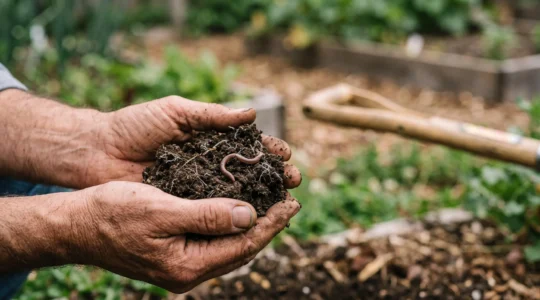
Natural Soil Regeneration: Why Digging Destroys Your Soil Structure?
Contrary to generations of gardening wisdom, digging and tilling are the most destructive things you can do to your soil’s health and fertility. Digging shatters the delicate fungal networks that feed your plants and creates a hardpan layer beneath the…
Read more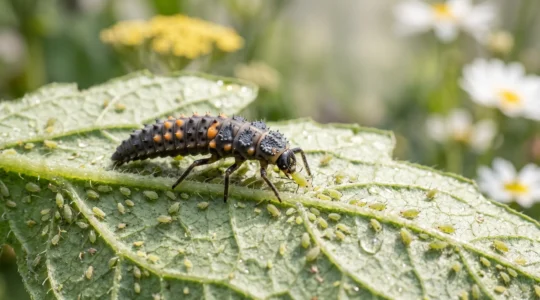
How to Attract Beneficial Insects to Eat 90% of Your Aphids?
Tackling an aphid infestation isn’t about finding the right spray; it’s about becoming a strategic ecosystem manager. Instead of reacting to pests, the most effective long-term solution is to proactively build a garden that recruits and sustains a permanent army…
Read more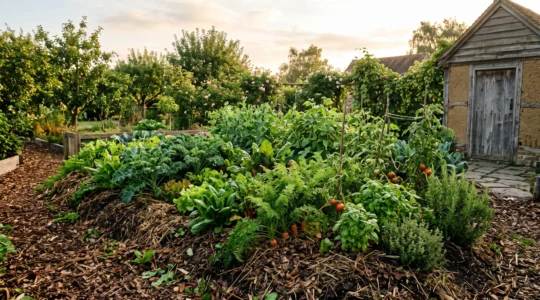
Creating Self-Sustaining Ecosystems: How to Stop Buying Compost and Fertilizer?
Achieving a self-sustaining garden isn’t about better compost piles; it’s about re-engineering your space into a closed-loop nutrient cycling engine. Success depends on managing the Carbon-to-Nitrogen ratio directly on the soil surface, not in a separate bin. Dedicated “biomass generator”…
Read more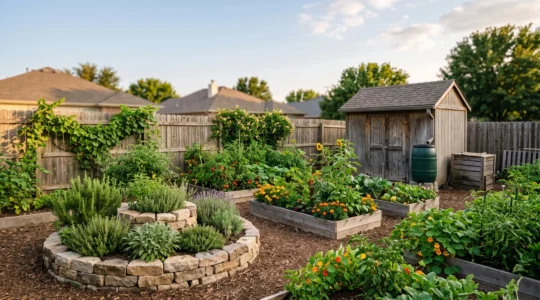
How to Apply Permaculture Principles to Your Suburban Garden (Without the Mess)
Permaculture is not about creating a messy, wild jungle; it’s about applying smart design tools to make your conventional garden more efficient and self-sufficient. You can dramatically increase productivity by observing natural patterns like sun and shade before planting a…
Read more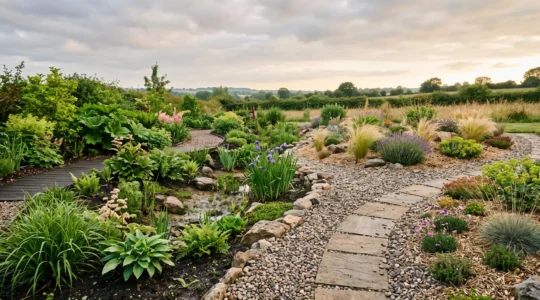
Designing for Climate Resilience: Gardens That Survive Flood and Drought
The increasing cycle of winter deluges and summer heatwaves is causing conventional gardens to fail. The solution is not merely choosing different plants, but re-engineering your garden’s fundamental structure. By focusing on soil permeability, deep-rooted anchorage, and intelligent water management,…
Read more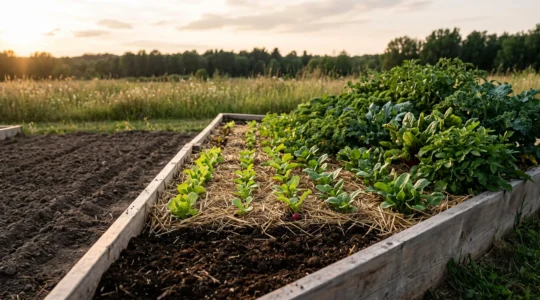
Managing Organic Soil Nutrients: The 3-Year Plan for Self-Sufficiency
Achieving soil self-sufficiency is not about adding more inputs; it’s about building a system that manages its own fertility. Many ‘green manures’ like Mustard don’t fix nitrogen but are strategic nutrient scavengers. Nutrient lock-out is often caused by an excess…
Read more
Bioswales vs Traditional Drains: Which Handles Heavy Rainfall Better?
Bioswales are not just eco-friendly alternatives; they are high-performance green infrastructure that functionally surpasses traditional drains in managing heavy rainfall when properly engineered. They actively treat stormwater by filtering pollutants and reducing volume, rather than simply displacing the problem downstream….
Read more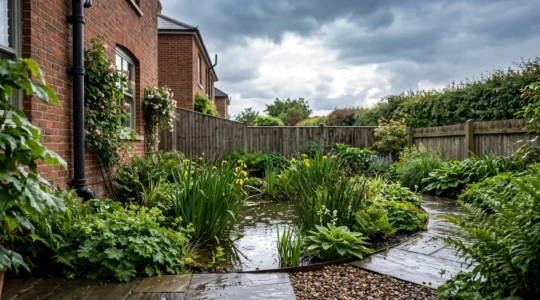
Rain Garden Engineering: A Guide to Managing UK Storm Surges
A functional rain garden is an engineered drainage system, not just a wet flowerbed; its success depends on precise design rather than simple plant selection. Sizing is non-negotiable and must be calculated based on the hydraulic load from your roof…
Read more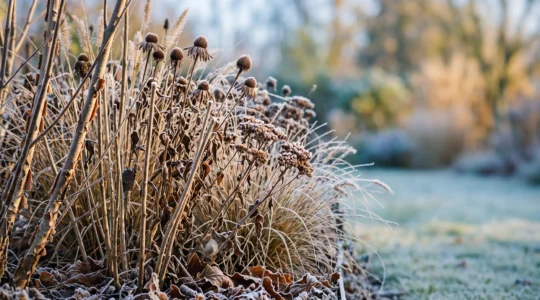
The Tidy Garden’s Hidden Toll: Why Premature Autumn Cleanup Harms Your Garden’s Unseen Allies
The common urge to “tidy up” the garden for winter is inadvertently destroying the essential homes and food sources of your most beneficial wildlife. Leaving structural stems and leaf litter provides critical insulation and food for hibernating insects and wintering…
Read more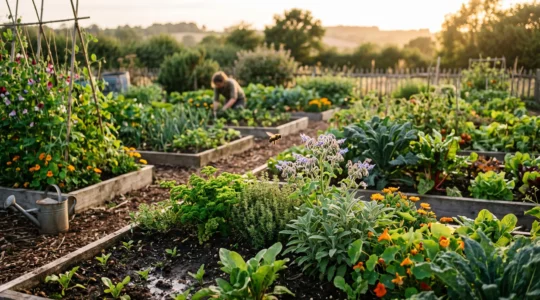
Understanding Plant Life Cycles to Reduce Chemical Pesticide Use
The most effective organic pest control isn’t a product; it’s a calendar that synchronizes your gardening activities with the natural life cycles of plants, pests, and predators. Young plants are chemically vulnerable, making them prime targets for pests. Beneficial insects…
Read more