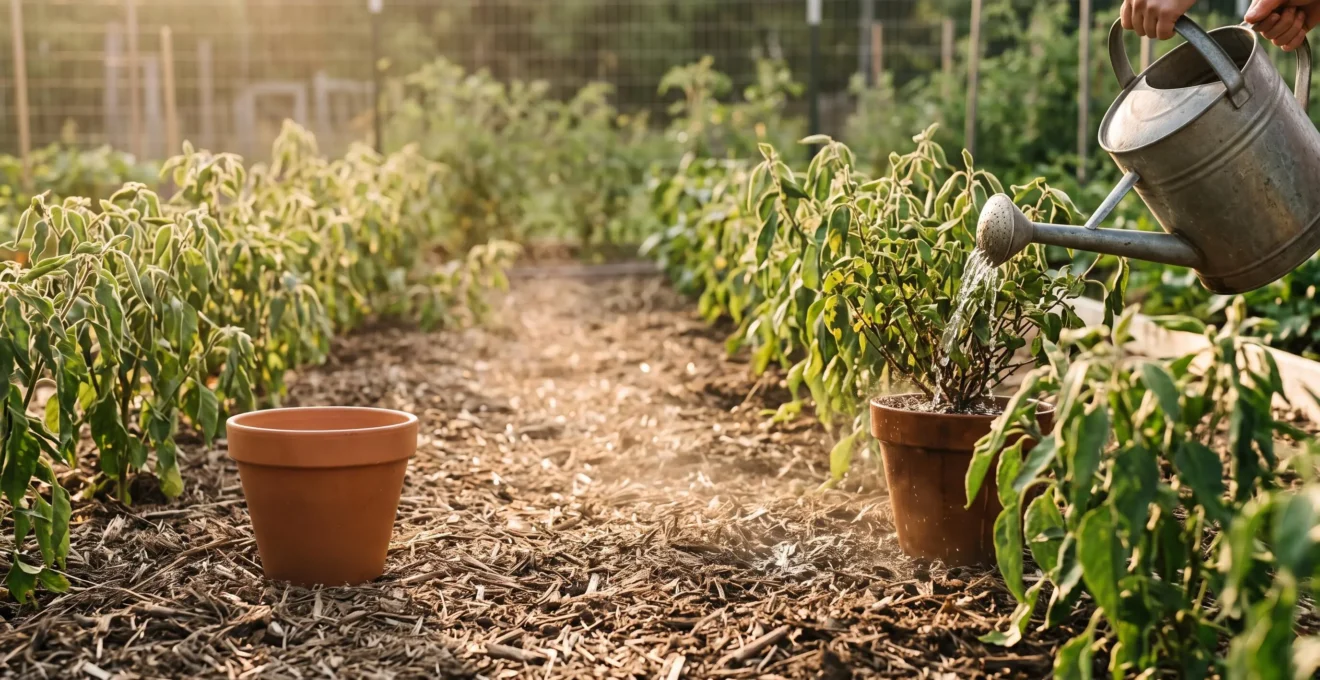
When UK temperatures soar past 30°C, traditional watering isn’t enough; it’s a race to prevent irreversible cell collapse in your plants.
- Distinguish between recoverable (temporary) and fatal (permanent) wilting to know when to act.
- Improvise shade with light-coloured fabrics suspended above plants, not draped directly on them.
- Water deeply in the early morning to hydrate roots before the heat hits and reduce fungal risk.
Recommendation: Your immediate priority is to reduce the plant’s core temperature through shading and targeted root-zone hydration, not just surface sprinkling.
The Met Office issues a red warning for extreme heat. The lawn is crisp, the air is thick, and in the garden, your prize-winning dahlias are dramatically slumped over, leaves limp and defeated. For UK gardeners, this scene is becoming disturbingly familiar. Our traditional gardening wisdom, built for a temperate, damp climate, is buckling under the pressure of increasingly frequent and intense summer heatwaves. The instinct is to douse everything in water, but this often does more harm than good, wasting a precious resource and sometimes even stressing the plants further.
Most advice centres on the obvious: water more, provide shade. But this fails to address the critical underlying biology. A plant wilting in 30°C heat isn’t just “thirsty”; it’s experiencing systemic failure. Its internal cooling mechanism, called transpiration, can’t keep up, and its cells are losing the vital turgor pressure that keeps them rigid. The real challenge isn’t just about survival, but about building resilience into our gardens for the hotter future that is already here. What if the key wasn’t just reacting to the heat, but redesigning our approach to watering, shading, and even soil structure?
This guide moves beyond the basics. We’ll explore the crucial difference between a plant that’s temporarily drooping and one that’s past the point of no return. We’ll dissect the physics of effective shading, the science of optimal watering times, and the emergency procedures for rehydrating pots that have become water-repellent. Ultimately, we will look towards building a garden that doesn’t just survive a heatwave, but is fundamentally designed to thrive in a changing climate.
This article provides a complete roadmap, from emergency triage for a single wilting plant to long-term strategies for a climate-resilient garden. Discover the critical signs to watch for, the best materials to use, and the techniques that will make a real difference when the temperature climbs.
Summary: A Gardener’s Emergency Guide to Surviving Heatwaves
- Temporary vs Permanent Wilting: When Has a Plant Gone Too Far?
- Fleece or Sheets: Improvising Shade During a Red Warning?
- Morning or Evening: When Does Watering Risk Scorch or Mold in Heat?
- Straw vs Bark: Which Mulch Reflects Heat Best?
- The Dunking Method: Rehydrating Dried Out Pots That Repel Water?
- Why Gravel Gardens Handle Both Deluge and Drought Best?
- Plants for 2030: Selecting Species for Hotter, Drier Summers
- Designing for Climate Resilience: Gardens That Survive Flood and Drought
Temporary vs Permanent Wilting: When Has a Plant Gone Too Far?
That dramatic midday droop of a hydrangea or cucumber plant is a heart-stopping sight for any gardener. But is it a cry for help or a death rattle? The answer lies in understanding the difference between temporary and permanent wilting. Plants begin to experience measurable stress once air temperatures climb above 86°F (30°C). To cope, they transpire, releasing water vapour from their leaves to cool down—a plant’s version of sweating. If water loss outpaces water uptake from the roots, the plant loses internal water pressure, or turgor pressure, and its leaves and stems go limp. This is temporary wilting.
This state is a survival mechanism. The plant reduces the surface area of its leaves exposed to the sun, conserving what little moisture it has left. Often, as temperatures drop in the evening, a plant that was dramatically wilted at 3 p.m. will recover on its own as transpiration slows and the roots catch up. Permanent wilting, however, is a far more serious condition. This occurs when the soil is so dry that cells have lost too much water and have collapsed. At this stage, even if you provide water, the plant’s vascular system is too damaged to absorb it, and it will not recover. A simple test is to check the soil; if it’s moist and the plant is still wilted, it could be a sign of root disease or irreversible wilting point.
To distinguish, look for crisp, dry, or brown leaves, which indicate cell death. A temporarily wilted plant’s leaves are limp but still pliable and green. If a plant wilts during the day but perks up by morning, you are dealing with temporary stress. If it remains wilted overnight, you are approaching the critical danger zone. The goal of any heatwave strategy is to intervene before temporary wilting becomes permanent.
As you can see in this comparison, the difference is stark. The turgid leaf is full of life, its structure supported by water-filled cells. The permanently wilted leaf has lost this structural integrity, a visual cue that a critical threshold has been crossed. Your immediate actions should focus on reducing water loss (shade) and increasing water uptake (correct watering) to prevent your plants from reaching this irreversible state.
Fleece or Sheets: Improvising Shade During a Red Warning?
When a heatwave hits, your first instinct should be to provide shade. But what you use, and how you use it, matters immensely. Draping a dark towel or thick blanket directly onto foliage can be a fatal mistake; it traps heat and air, essentially cooking the leaves. The goal is to create an artificial canopy that intercepts sunlight while allowing air to circulate freely. An ideal improvised shade structure should be suspended at least 20-30cm above the plants, using canes, stakes, or a garden frame.
The material itself is just as important. While horticultural fleece is a common choice, its primary design is for frost protection, not heat reflection. In an emergency, old white bedsheets, net curtains, or any light-coloured, breathable fabric are superior choices. The colour is critical due to the principle of albedo, or reflectivity. According to research, trials comparing reflective white materials to black shade cloth found a 30% reduction in heat gain at the same shading level. A white surface reflects solar radiation away, while a dark surface absorbs it and radiates it down onto your plants.
For those looking to invest in a more permanent solution, commercial shade cloth is sold by a density percentage, indicating how much light it blocks. The right density depends entirely on what you’re trying to protect.
| Shade Density | Best Suited For | Rationale |
|---|---|---|
| 10–30% | Full-sun crops (tomatoes, peppers, melons) | Takes the edge off peak heat without blocking needed light |
| 40–50% | Lettuce, herbs, leafy greens | Balances protection from bolting/wilting with enough light for growth |
| 60–70% | Tender plants, ferns, shade-loving ornamentals | Provides near-full protection for species sensitive to direct sun |
Whether using a bedsheet or professional cloth, remember to remove the covering once the heatwave passes. Plants that need full sun will suffer if left in the shade for too long. The key is adaptive management: providing temporary, strategic relief from the most extreme conditions.
Morning or Evening: When Does Watering Risk Scorch or Mold in Heat?
The age-old debate in gardening is when to water. During a heatwave, the timing becomes less about preference and more about plant physics. As experts at Utah State University Extension note, “When a plant lacks enough water to cool itself, or cannot move the water fast enough to cool its leaf surfaces, it starts taking drastic measures to survive.” Your goal is to replenish the plant’s water reserves before it has to take those measures. The best time to do this is in the early morning, between 5 a.m. and 9 a.m.
Watering in the morning gives the plant a full tank of water to draw from for transpiration cooling throughout the hottest part of the day. It allows the foliage to dry before nightfall, significantly reducing the risk of fungal diseases like powdery mildew, which thrive in damp, cool conditions. Midday watering is the least efficient option; much of the water evaporates from the hot soil surface before it can ever reach the root zone. Furthermore, dousing hot soil with cold tap water can cause temperature shock. An academic publication notes that most garden plants prefer soil temperatures within the 65–75°F (18-24°C) range, and sudden, drastic changes can add another layer of stress.
What about evening watering? It’s the second-best option and certainly better than midday. It allows the plant to rehydrate overnight without the pressure of intense sun and heat. However, the major downside is that leaves remain wet for an extended period, creating a perfect breeding ground for slugs, snails, and fungal pathogens. If evening is your only option, it is crucial to apply water directly to the soil using a soaker hose or watering can with a rosette, avoiding the foliage entirely. A deep, infrequent watering (two to three times a week) that soaks the soil thoroughly is always more effective than a light, daily sprinkle that only encourages shallow roots.
Straw vs Bark: Which Mulch Reflects Heat Best?
While shading protects the leaves, mulch protects the most vital and vulnerable part of the plant: the roots. As the Oregon State University Extension Service states, “Mulch conserves moisture in the soil by slowing evaporation and minimizing temperature fluctuation in the soil.” A thick layer of organic material acts as an insulating blanket, keeping the soil cooler during the day and preventing rapid water loss. In a UK heatwave, a layer of at least 4-6 inches (10-15cm) is recommended for maximum effect.
But does the type of mulch matter? Absolutely. When it comes to reflecting heat, light-coloured, airy materials are far superior to dark, dense ones. Think again of the albedo effect: a layer of golden straw will reflect a significant amount of solar energy, whereas dark bark chips or compost will absorb it, potentially heating the soil surface. While bark is excellent for long-term soil health and winter insulation, straw, chopped leaves, or even grass clippings (in thin layers to avoid a slimy mat) are better tactical choices for summer heat.
The structure of the mulch also plays a role. An airy mulch like straw or pine needles has thousands of tiny air pockets. This trapped air is a poor conductor of heat, creating a highly effective insulating barrier between the hot ambient air and the cooler soil below. Denser mulches like bark or wood chip have less of this insulating air space. The goal in summer is to prevent heat from penetrating downwards, a task for which light, airy mulches are perfectly designed.
The visual difference between these materials hints at their thermal properties. The light, reflective surface and open structure of straw are ideal for deflecting summer heat. The dark, dense nature of bark, while great for moisture retention, will absorb more solar energy. For a summer heatwave, prioritize reflection and insulation by choosing a light-coloured, loose-textured mulch to give your plant roots the protection they desperately need.
The Dunking Method: Rehydrating Dried Out Pots That Repel Water?
You’ve been watering your potted plants, but they still look wilted and the water seems to run straight through. The likely culprit is hydrophobic soil—a condition where bone-dry potting mix actually repels water. This is incredibly common in the UK, where many multipurpose composts are heavily peat-based. As the Hunker editorial team explains, “When it comes to potting soils, most hydrophobic mixes contain peat, which, once it dries out, has difficulty in taking in the water again, as it repels water and shrinks.” The compost pulls away from the sides of the pot, creating channels where water runs straight out the bottom, leaving the root ball completely dry.
This isn’t just a gardening annoyance; it’s a widespread agricultural issue, with studies showing that soil water repellency has been documented as a common issue in over 50 countries, particularly affecting sandy and peat-based soils. Simply watering from the top is futile. The solution is the “dunking method.” This involves placing the entire pot into a larger bucket or tub of water. You will see air bubbles rising from the soil as the water slowly forces its way into the dry pockets. Leave the pot submerged until the bubbles stop—this can take anywhere from 15 minutes to over an hour for severely dry soil. This process ensures the entire root ball is thoroughly and evenly rehydrated from the bottom up.
Once rehydrated, the key is prevention. Avoid letting peat-based mixes dry out completely. If the problem persists, you can add a few drops of a natural wetting agent (or even a gentle, biodegradable washing-up liquid) to your watering can. This breaks the surface tension of the water, allowing it to penetrate the soil more effectively. For long-term health, incorporate more organic matter like coir or well-rotted compost into your potting mixes to improve their structure and moisture retention.
Action Plan: Fixing Hydrophobic Potting Soil
- Diagnose the Problem: Water the pot. If water immediately runs out the bottom or down the inside edge of the pot while the surface remains dry, confirm the soil is hydrophobic.
- Perform the Dunk: Submerge the entire pot in a bucket of water. Wait until all air bubbles have stopped rising to ensure full saturation of the root ball.
- Drain and Recover: Remove the pot from the water and allow all excess to drain away completely. Do not leave the plant sitting in a saucer of water, which can lead to root rot.
- Apply a Wetting Agent: For the next few waterings, add a commercial or homemade wetting agent to your water to help maintain moisture penetration and break any remaining surface tension.
- Prevent Recurrence: Incorporate moisture-retentive materials like coir or leaf mould into your potting mixes when repotting, and maintain a consistent watering schedule to prevent the soil from drying out completely.
Why Gravel Gardens Handle Both Deluge and Drought Best?
While emergency measures are vital, long-term resilience requires a shift in garden design. The gravel garden, famously championed by gardener Beth Chatto in her dry garden in Essex, is a masterclass in managing water extremes. It may seem counterintuitive that a garden based on stone could be so effective, but the magic lies in the soil structure beneath. A gravel garden is not simply plants in a sea of pebbles; it is a deep layer of gravel laid over a meticulously prepared, free-draining soil, with plants planted directly into it. The gravel itself acts as a superlative mulch.
During a drought, the gravel layer serves several functions. It completely stops surface evaporation, locking moisture into the soil below. It also reflects heat, keeping the root zone significantly cooler than exposed soil would be. Unlike organic mulches, it doesn’t decompose or blow away. During a deluge—an increasingly common feature of the UK’s changing climate—the porous nature of the gravel and the underlying soil allows excess water to drain away rapidly, preventing waterlogging and root rot. As Lara Bryant of the NRDC points out, “Soils with a lower bulk density and greater porosity route water more efficiently during floods and retain more for plants, and so perform better during droughts.” A gravel garden is the ultimate expression of this principle.
This system creates a stable, protected environment for plant roots, buffered from the wild swings of flood and drought. It is the perfect home for drought-tolerant, Mediterranean-style plants that thrive in sharp drainage and have adapted to survive hot, dry summers. By focusing on creating this deep, porous, and protected root environment, the gravel garden provides a powerful template for a garden that works with the climate, not against it.
Plants for 2030: Selecting Species for Hotter, Drier Summers
A resilient garden is not just about techniques; it’s about choosing the right players for the team. As UK summers become hotter and drier, some of our traditional cottage garden favourites, like many hydrangeas and delphiniums, will struggle without constant intervention. The future-proofed garden will lean heavily on plants that are naturally adapted to these conditions. This doesn’t mean your garden has to look like a desert; it means selecting beautiful plants that have built-in survival mechanisms.
Look for plants with features that signal drought tolerance. Silver or grey foliage, seen on plants like Lavender, Santolina, and Stachys byzantina (Lamb’s Ear), reflects sunlight, reducing leaf temperature. Hairy or waxy leaves, found on Phlomis or Cistus (Rock Rose), trap a layer of humid air close to the leaf surface, reducing moisture loss. Plants with small or needle-like leaves, such as Rosemary or many grasses, have less surface area from which to lose water. Many of these plants originate from the Mediterranean and have evolved to thrive in the exact conditions we are beginning to experience.
Taproots are another key feature. Plants like Eryngium (Sea Holly) and Verbascum send a deep taproot far down into the soil to find moisture long after the surface has dried out. Succulents, such as Sedums and Sempervivums, store water in their fleshy leaves, creating their own personal reservoir. When selecting plants, it’s worth consulting resources like the RHS ‘Plants for a Changing Climate’ project, which specifically researches and recommends species that will perform well in the UK’s future climate. Choosing the right plant for the right place is the most powerful and sustainable step you can take towards a beautiful, low-maintenance, and heat-resilient garden.
Key Takeaways
- The difference between recoverable temporary wilting and fatal permanent wilting is the key to knowing when and how to act.
- Effective shading requires light-coloured, breathable material suspended above plants, not draped on them, to reflect heat and allow airflow.
- Morning watering is superior as it hydrates plants for the day ahead and reduces fungal risk; deep, infrequent watering is better than light daily sprinkling.
Designing for Climate Resilience: Gardens That Survive Flood and Drought
Surviving the next heatwave is a short-term goal. The real victory lies in creating a garden ecosystem that is inherently resilient to the climate of the next decade. This means thinking about your garden as a complete system, from the canopy of the trees down to the microorganisms in the soil. The single most impactful long-term strategy is to improve your soil’s structure and organic matter content. Healthy soil, rich in compost and leaf mould, acts like a sponge.
As experts at the University of Nebraska-Lincoln succinctly put it, “It’s critical that soil both let water flow through, and hold water for later.” This dual function is the heart of resilience. During a downpour, the improved structure allows water to drain, preventing root rot. During a drought, the organic matter holds onto that moisture, releasing it slowly to plant roots. The effect is not trivial; it’s estimated that an increase of just 1% in soil organic matter can boost water-holding capacity by roughly 150,000 litres per hectare. This turns your soil into a natural reservoir.
Resilient design also involves creating layers. Taller, drought-tolerant trees or shrubs can provide natural, dappled shade for more tender underplantings. Using groundcover plants to carpet bare soil acts as a living mulch, cooling the earth and reducing evaporation far more effectively than bare soil. Working with the contours of your land, creating gentle depressions or ‘swales’ can help to passively harvest rainwater, slowing it down and allowing it to soak into the ground rather than running off.
This kind of layered, thoughtful design creates a self-sustaining system. It’s a garden that requires less intervention—less watering, less feeding, less panic—because it has been built from the ground up to handle extremes. It moves beyond simply choosing drought-tolerant plants to creating an environment where a wider range of plants can thrive, buffered from the worst effects of a volatile climate.
By implementing these strategies, from emergency triage to long-term resilient design, you can equip your garden to not only survive but flourish in the face of the UK’s new climate reality. The next step is to assess your own garden and identify the most impactful changes you can make today.