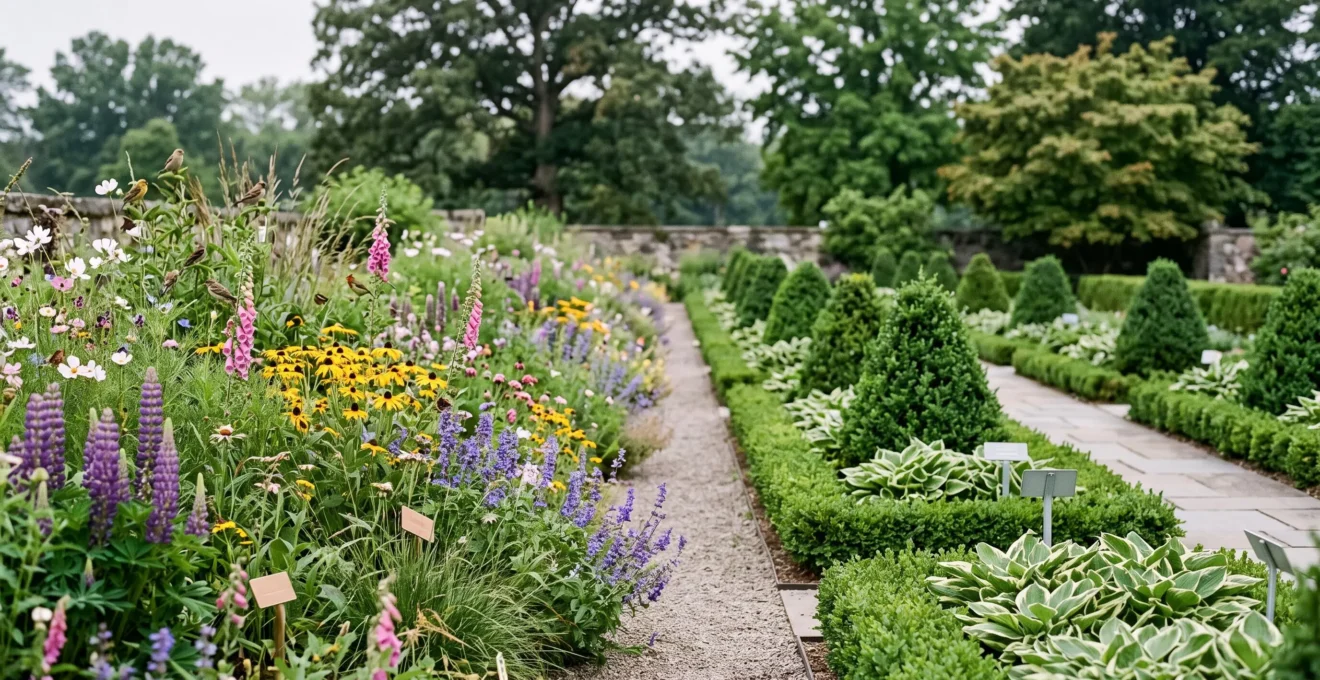
The greatest impact on wildlife comes not from planting any native, but from choosing the hyper-specific, locally-evolved plants that power the entire food web.
- Specialist insects, like caterpillars, often can only eat plants they co-evolved with, making them the foundation of the ecosystem.
- A plant’s genetic origin (local provenance) is as crucial as its species, impacting its resilience and partnerships with soil life.
Recommendation: Prioritize sourcing plants and seeds with documented local provenance to create a genuinely functional, resilient habitat.
For the wildlife gardener, the goal is simple: create a space teeming with life. You’ve likely followed the common wisdom—plant flowers for pollinators, add a bird bath, and let a corner of the yard go a little wild. These are commendable first steps. Yet, you might look out your window and wonder where the promised explosion of biodiversity is. The birds are few, the butterflies are common visitors rather than residents, and the hum of insect life is more of a whisper.
The advice to “plant natives” is everywhere, but it often lacks the critical detail that separates a pretty garden from a functional ecosystem. The truth is that not all native plants are created equal. The most profound, data-supported shift in rewilding your space isn’t just about adding indigenous species; it’s about understanding the deep, ancient, and often invisible relationships that bind a specific plant to the life it supports. It’s a game of chemical precision and genetic memory.
But what if the real key to unlocking your garden’s potential wasn’t just *what* species you plant, but *where its ancestors grew*? What if the difference between a garden that merely attracts wildlife and one that actively sustains it lies in the microscopic fungi in the soil and the specific chemical compounds in a single leaf? This is where the data leads us—away from generalities and toward the power of co-evolutionary specialization.
This guide moves beyond the basics to explore the science-backed principles that drive biodiversity. We will dissect the precise mechanisms, from caterpillar-leaf chemistry and parasitic plants that create diversity, to the hidden life in hollow stems, providing you with the strategic knowledge to make every planting choice a powerful act of ecological restoration.
To help you navigate these advanced concepts, this article is structured to build your expertise from the ground up. The following summary outlines the key ecological principles we will explore, each designed to transform your approach to wildlife gardening.
Summary: The Science of Creating a Functional Native Habitat
- The Co-evolution Factor: Why Caterpillars Only Eat Specific Native Leaves?
- Nettle and Dock: Can You Incorporate Them Without It Looking Messy?
- Native vs Native Origin: Why Local Provenance Seeds Matter?
- Yellow Rattle: The Parasite You Need to Start a Wildflower Meadow?
- Container Pond Natives: Bringing Wildlife to a Balcony?
- Why Native Hedges Outperform Conifers in Drought Conditions?
- Which Seed Heads Provide the Most Calories for Winter Birds?
- Why Cutting Back Autumnal Dormancy Structure Harms Hibernating Insects?
The Co-evolution Factor: Why Caterpillars Only Eat Specific Native Leaves?
The single most important concept for a wildlife gardener to grasp is co-evolutionary specialization. For millions of years, native plants and insects have been in a chemical arms race. Plants evolved toxins to avoid being eaten, and specific insects evolved the unique gut chemistry to neutralize those toxins for a single plant or plant family. This makes them “specialists.” An exotic plant from another continent, like a butterfly bush, offers nectar but its leaves are inedible to almost all our native caterpillars. Since caterpillars are the primary food source for terrestrial birds, an exotic-heavy garden is effectively a food desert.
The data on this is staggering. Landmark research reveals that a very small number of “keystone” native plants are responsible for feeding the vast majority of the food web. According to a food-web study led by entomologist Doug Tallamy, just 14% of native plant species support 90% of caterpillar diets. This means choosing a native oak over a native maple can have an exponentially greater impact, as oaks support hundreds more caterpillar species. This isn’t a preference; it’s a biochemical necessity.
This macro photograph illustrates the intimate connection between a specialist insect and its host. The caterpillar is not just a visitor; it’s a resident whose entire life cycle depends on the specific chemistry and structure of this native leaf.
This specialist relationship is the engine of the ecosystem. As Doug Tallamy, a University of Delaware entomologist, noted upon discovering the outsized role of keystone plants, the implications are immense for conservation efforts focused on restoring functional food webs.
The magnitude of that finding surprised us
– Doug Tallamy, University of Delaware entomologist, National Wildlife Federation Magazine, “Power Plants”
By failing to plant these powerful native species, we sever the foundational link in the food chain. The insects can’t eat, so the birds have nothing to feed their young. Understanding this principle shifts the gardener’s role from decorator to a critical manager of local ecological trophs. Your job is to provide the specific fuel for the base of the food web.
Nettle and Dock: Can You Incorporate Them Without It Looking Messy?
The mere mention of stinging nettles (Urtica dioica) or broad-leaved dock (Rumex obtusifolius) can make a tidy gardener shudder. Often perceived as aggressive, untidy weeds, they are typically the first plants to be removed. However, from a rewilding perspective, these native “weeds” are ecological powerhouses. Nettles are the exclusive host plant for the caterpillars of stunning butterflies like the Red Admiral, Comma, and Peacock. Without nettles, these species simply cannot reproduce in your garden.
The challenge, then, is not one of eradication but of management. How can you harness their wildlife value without letting them dominate your landscape? The key is strategic containment. Instead of letting them spread through a prize border, dedicate a specific, out-of-the-way area to them. A “wild corner” behind a shed or at the back of a shrubbery is perfect. You can even grow them in a large, sunken container (with the bottom removed to allow root access) to physically prevent their runners from spreading.
For dock, whose deep taproot makes it difficult to control, the strategy is similar. Allowing a single plant to mature in a less-manicured area provides food for the larvae of the Small Copper butterfly. By treating these plants with the same intentionality as a prized rose, you can integrate their immense ecological function without sacrificing aesthetic control. It requires a mental shift: viewing them not as an invasion to be fought, but as a designated habitat zone to be curated. This approach delivers high wildlife value with minimal visual disruption to the more formal areas of your garden.
Native vs Native Origin: Why Local Provenance Seeds Matter?
You’ve decided to plant a native Milkweed for Monarchs. You buy a plant labeled “Asclepias tuberosa, Native to North America.” This seems like a win, but the data suggests we need to be far more precise. A milkweed plant grown from Arizona seed will have evolved under very different conditions than one from Ohio. This genetic difference, known as local provenance or ecotype, is critically important. Plants are adapted not just to a continent, but to a specific climate, soil type, and day length.
This local adaptation extends to a plant’s invisible partners. Native plants form symbiotic relationships with soil fungi called mycorrhizae, which help them absorb water and nutrients. These partnerships are also locally adapted. Planting a “foreign native” can create a mismatch, resulting in a weaker, less resilient plant that is more susceptible to disease and drought. The concept of local provenance is not just a preference; it is a measurable biological reality.
Case Study: Origin Matters – Local Mycorrhizal-Plant Adaptation
A compelling study on prairie plants demonstrates this principle perfectly. As detailed in a study on local adaptation between plants and their below-ground partners, researchers tested milkweed paired with mycorrhizal fungi from either their own local population or a distant one. The results were clear: plants paired with their “hometown” fungal partners exhibited significantly stronger growth and better resistance to pathogens. This shows that the web of life extends deep into the soil, and respecting those local connections is key to success.
For the gardener, this means seeking out nurseries and seed suppliers who can tell you the origin of their stock. It means prioritizing seeds collected from your own county or state. This ensures you are planting a genetically appropriate specimen that will thrive and, most importantly, function correctly within your local ecosystem. It is the ultimate expression of “right plant, right place.”
Action Plan: Sourcing True Local-Provenance Plants
- Define Your Ecoregion: Use online tools like the EPA’s ecoregion maps to identify your specific local environment beyond just state lines.
- List Keystone Species: Research the top-performing keystone plants (e.g., oaks, willows, asters) for your specific ecoregion.
- Vet Nurseries: Call local nurseries and ask a direct question: “Do you sell plants grown from seed sourced within our ecoregion or state?” Their answer reveals their commitment to ecological principles.
- Read Seed Packets: When buying seeds, look for explicit mention of the state or county of origin. Vague terms like “North American Native” are a red flag.
- Join Local Groups: Connect with your local Native Plant Society chapter or regional seed-saver exchanges. These are the most reliable sources for true local ecotypes.
Yellow Rattle: The Parasite You Need to Start a Wildflower Meadow?
One of the biggest challenges in establishing a wildflower meadow is the overwhelming competition from vigorous grasses. They quickly outcompete delicate wildflower seedlings for light, water, and nutrients. The conventional solution involves herbicides or laboriously stripping the turf. However, nature offers a more elegant and effective tool: Yellow Rattle (Rhinanthus minor).
Yellow Rattle is a fascinating native plant known as a hemiparasite. This means it photosynthesizes for itself but also attaches its roots to the roots of nearby grasses, drawing water and nutrients from them. This parasitism weakens the grass, effectively “thinning the herd” and opening up space for wildflowers to establish and thrive. For this reason, it’s often called “the meadow maker.” It is an essential ecological engineer for creating biodiverse grasslands.
Sowing Yellow Rattle seed into an existing lawn in the autumn is the first and most critical step in a low-effort meadow conversion. The seeds require a period of winter cold (stratification) to germinate, and once established, they dramatically shift the competitive balance in favor of floral diversity.
Case Study: Yellow Rattle Sowing Increases Plant Species Richness
The effectiveness of this method is well-documented. For instance, a replicated, controlled study in UK grassland confirmed its role as a mechanism for unlocking diversity. The research, published on Conservation Evidence, found that plots where yellow rattle was sown alongside wildflowers reached an average of 4.2 to 5.8 plant species per plot. In contrast, plots without the hemiparasite supported only 1.4 to 1.8 species. This demonstrates a clear, causal link between the presence of this single parasitic plant and a threefold increase in meadow biodiversity.
By introducing a single, strategic species, you are not just adding another plant; you are fundamentally changing the rules of the ecosystem to favor the outcome you want. It’s a powerful example of using ecological knowledge to achieve restoration goals with minimal intervention and maximum impact, moving beyond simple planting to active ecosystem management.
Container Pond Natives: Bringing Wildlife to a Balcony?
The need for a water source is a fundamental tenet of wildlife gardening. While not everyone has space for an in-ground pond, almost anyone can create a miniature aquatic habitat using a simple container. A large pot, a half-barrel, or any watertight vessel can become a vibrant ecosystem, even on a small patio or balcony. This simple addition can support a surprising amount of wildlife, from thirsty birds and bees to aquatic insects like dragonflies and damselflies, which may use it to lay their eggs.
The key to a successful container pond is choosing the right native plants. A balanced selection will keep the water healthy and provide functional structure. You need three types: 1. Oxygenators: These submerged plants, like Hornwort (Ceratophyllum demersum), are crucial. They release oxygen into the water and absorb excess nutrients, preventing algal blooms. 2. Floaters: Plants like Frogbit (Hydrocharis morsus-ranae) provide shade, which helps keep the water cool and limits algae growth, while offering cover for any aquatic life. 3. Emergents: These are plants rooted at the bottom with stems and leaves that rise out of the water, such as Marsh Marigold (Caltha palustris) or Lesser Spearwort (Ranunculus flammula). Their stems provide the critical structure for dragonfly and damselfly larvae to crawl out of the water to emerge as adults.
This wide shot shows how even a minimal setup on a balcony can become a fully functional miniature wetland. The combination of water and native emergent plants creates an oasis for urban wildlife.
No pumps or filters are needed. By balancing the planting, you create a self-sustaining system. It’s a powerful demonstration that significant habitat creation is not limited by space. A single, well-planted container can provide a critical resource that is otherwise absent in many urban and suburban landscapes, making a measurable difference to local biodiversity.
Why Native Hedges Outperform Conifers in Drought Conditions?
For decades, fast-growing conifer hedges like Leyland cypress have been the default choice for privacy screens. They grow quickly and provide a dense, evergreen barrier. However, they are ecological deserts, offering little food or shelter for wildlife. Furthermore, their shallow root systems and high water demands make them incredibly vulnerable to drought. In a changing climate, a native mixed hedge is a far more resilient and functional choice.
A native hedge, composed of species like Hawthorn, Blackthorn, Hazel, and Field Maple, is better adapted to local conditions. Its greatest advantage lies beneath the soil. These native species have deep, extensive root systems that are far more efficient at finding water. More importantly, they have spent millennia co-evolving with local networks of mycorrhizal fungi. This symbiotic relationship is a game-changer for drought resilience. The fungal network extends far beyond the plant’s own roots, acting like a massive underground sponge that captures and delivers water to the plant in exchange for sugars.
This underground partnership gives native plants a dramatic advantage during dry spells. Research confirms that these fungal partners can significantly boost a plant’s performance under water stress. For example, field research on mycorrhizal grasses under simulated drought found that fungal partnerships increased their photosynthetic rate by up to 63% compared to non-mycorrhizal plants. While conifers can form some fungal partnerships, the efficiency and specificity of the networks associated with local native flora are unparalleled.
In addition to drought tolerance, a native hedge provides a sequence of flowers for pollinators, berries for winter birds, and dense, thorny structure for nesting. It is a living, breathing part of the ecosystem, not just a static green wall. Choosing a native hedge is a long-term investment in a resilient, wildlife-rich landscape that will withstand climate pressures far better than any monoculture of conifers.
Which Seed Heads Provide the Most Calories for Winter Birds?
A tidy garden is a hungry garden. One of the most valuable resources you can provide for wintering birds is to simply leave the seed heads on your perennials instead of cutting them back in the autumn. These standing structures provide a natural larder that birds like goldfinches, sparrows, and chickadees rely on to survive the cold months. However, not all seed heads are created equal. Some offer far more nutritional value than others.
The best seed heads are those rich in oil and fat, which provide the high-energy calories birds need to maintain their body temperature. The top performers in this category are members of the Aster family. * Sunflowers (Helianthus): Both annual and perennial sunflowers produce large seeds packed with oil. Finches, cardinals, and jays will cling to the flower heads to extract them. * Coneflowers (Echinacea purpurea and Rudbeckia species): The spiky, dome-like centers of these flowers are filled with nutritious seeds. Goldfinches, in particular, are masters at extracting them. * Teasels (Dipsacus fullonum): Though a biennial and sometimes aggressive, the architectural seed heads of teasels are a magnet for goldfinches, which are uniquely adapted to pry the seeds from the prickly receptacles.
Beyond just calorie content, the structure of the seed head is also important. Plants with stiff, upright stems hold their seeds above the snow, keeping them accessible to birds throughout the winter. Plants like Joe Pye Weed (Eutrochium purpureum) and Goldenrod (Solidago species) may not have the highest oil content, but their fluffy seed heads persist and provide a reliable, accessible food source when other options are buried. By planting a variety of these species, you create a diverse, season-long buffet for your local bird population.
Key Takeaways
- A few “keystone” native plants, like oaks and willows, are responsible for supporting the vast majority of caterpillar species.
- Plants and their underground fungal partners from the same local origin are significantly more resilient and robust.
- Leaving plant stems and leaf litter over winter provides critical shelter for up to 30% of native bee species and other insects.
Why Cutting Back Autumnal Dormancy Structure Harms Hibernating Insects?
The impulse to “tidy up” the garden in autumn is deeply ingrained. We cut back perennials, rake every last leaf, and leave the soil bare for winter. From an ecological perspective, this is devastating. The dried, hollow stems and fallen leaves we are so quick to remove constitute the most important overwintering habitat for a huge diversity of insects. Your “clean” garden is a sterile, homeless environment.
Many of our most important pollinators do not live in hives. They are solitary creatures that need pre-existing cavities to lay their eggs and for the next generation to survive the winter. The hollow stems of plants like bee balm, Joe Pye weed, and elderberry are perfect nesting sites. According to the Xerces Society for Invertebrate Conservation, nearly 30% of native bee species nest inside hollow plant stems or wood cavities. When we cut these stems down in the fall, we are throwing away the next generation of pollinators.
This image symbolizes the hidden world within a dormant garden. The golden light glowing through these hollow stems evokes the unseen life sheltering inside, waiting for spring.
The solution is a radical act of restraint: do less. Leave the leaves where they fall to provide cover for hibernating queen bumblebees and the pupae of butterflies like the Luna moth. Wait until late spring, when temperatures are consistently above 50°F (10°C) and you see new growth emerging, to cut back the old stems. Even then, don’t discard them. Bundle the old stems and leave them in a quiet corner of the garden for another year to allow any late-emerging insects to complete their life cycle. This shift in practice from autumnal “cleanup” to spring “editing” is one of the most impactful changes a gardener can make for insect conservation.
This approach transforms the garden from a seasonal display into a year-round, fully functional habitat. It requires embracing a new aesthetic, one that finds beauty in the functional structure of a dormant winter garden and appreciates the vital life it protects. It’s the final, crucial step in becoming a true steward of your local ecosystem.
By applying these data-driven principles—from selecting keystone species of local provenance to providing year-round structural habitat—you can transform your garden into a powerful engine of biodiversity. Start today by choosing one principle to implement; the results will ripple through your local food web.