In summary:
- The key to perennial survival in wet winters isn’t just plant choice; it’s managing the underground root environment.
- Allowing foliage to die back naturally is crucial for storing energy in the roots for winter.
- Proper mulching and drainage prevent root suffocation and rot, which are bigger threats than cold.
- Choosing bare-root plants and embracing a slightly “untidy” garden provides a stronger foundation for both plants and wildlife.
For any British gardener, the sight is depressingly familiar: a soggy, collapsed perennial that was thriving in summer but failed to reappear in spring. Each year, countless plants are lost not to the cold, but to the relentless damp of a UK winter. The common advice is often to ‘improve drainage’ or simply ‘choose hardy plants’, but this overlooks the real battlefield for survival, which lies unseen beneath the soil. Gardeners are tired of this costly cycle of replacement, seeking plants and practices that promise genuine longevity.
The solution is not just about picking tougher varieties from a catalogue. True resilience is built by understanding the invisible architecture of the root system and its needs throughout the dormant season. The health of a plant in May is decided by the conditions its roots endured in December. The secret lies in managing the root’s energy cycle, ensuring it can breathe when the soil is saturated, and protecting its vulnerable crown from the destructive freeze-thaw cycles that plague our climate.
But if the real key to winter survival is protecting the root’s environment, where do we begin? This guide moves beyond the platitudes to focus on the critical actions that make a tangible difference. We will explore how a plant’s own foliage acts as a vital energy source, how to mulch for insulation without creating a swamp, and the single most common drainage mistake that dooms even the hardiest roots. By understanding these principles, you can shift from replacing plants to building a robust, resilient garden that thrives year after year.
This article will guide you through the essential strategies for safeguarding your perennials’ root systems. The following summary outlines the key topics we will cover to help you build a truly winter-proof garden.
Summary: A Guide to Ensuring Perennial Root Survival in Wet Winters
- Why Cutting Back Foliage Too Early Starves the Root System?
- How to Mulch Perennials to Insulate Roots at -5°C?
- The Drainage Mistake That rots Hardy Roots Before Spring
- Bare-Root vs Pot-Grown: Which Establishes a Stronger System?
- How to Stimulate Root Recovery After Waterlogging Damage?
- How to Use Dead Foliage to Insulate Tender Crowns Naturally?
- Resistance Breeding: The Only Real Cure for Clubroot?
- Why Cutting Back Autumnal Dormancy Structure Harms Hibernating Insects?
Why Cutting Back Foliage Too Early Starves the Root System?
The urge to “tidy up” the garden in autumn by cutting back herbaceous perennials is strong, but it’s one of the most detrimental things you can do for a plant’s long-term health. The foliage, even as it yellows and fades, is the plant’s engine. Throughout late summer and autumn, it works tirelessly, photosynthesising to create sugars that are sent down and stored in the roots. These energy reserves are the plant’s lifeline, the fuel it needs to survive dormancy and power new growth in spring.
When you cut back this foliage prematurely, you are essentially unplugging the charger before the battery is full. This leaves the root system weak and ill-prepared for the stresses of winter. A well-fed root system is more resilient to rot, disease, and cold. Starving it of those final weeks of energy production can be the difference between a vigorous return in spring and a weak, struggling plant, or no plant at all.
Furthermore, the standing dead foliage serves a structural purpose. The stalks and leaves trap snow and leaf litter around the base of the plant, creating a natural, insulating blanket. This layer helps to protect the vulnerable crown—the point where stems meet roots—from the damaging effects of repeated freezing and thawing. As one horticultural advisor notes, these freeze-thaw cycles can cause the ground to heave and push a plant’s crown to the surface, exposing it to lethal cold and moisture. Leaving the foliage intact provides a crucial buffer against this physical damage.
How to Mulch Perennials to Insulate Roots at -5°C?
Mulching is a cornerstone of winter plant protection, but its primary role in a wet British winter is often misunderstood. It’s less about keeping the soil warm and more about keeping its temperature stable. A thick layer of mulch acts as a buffer, preventing the rapid freeze-thaw cycles that heave plants from the ground and damage delicate root structures. Even at temperatures around -5°C, a consistent, frozen state is less damaging than a daily swing between frozen and soggy.
However, the wrong mulch or application can be disastrous, trapping excessive moisture around the crown and promoting rot. The key is to choose a material that insulates while still allowing for air circulation and drainage. According to RHS guidance for UK conditions, a layer of well-rotted compost, chipped bark, or even grit applied at least 5cm (2in) thick is effective. The timing is also crucial: apply it in late autumn after the ground has cooled but before the first hard frosts, typically between November and February.
Choosing the right material is vital for preventing a waterlogged crown. A dense, soggy layer of the wrong material can do more harm than good by suffocating the roots. For wet winter climates, a careful comparison of materials is essential for success.
| Mulch Material | Air Circulation | Water Retention | Best Use in Wet Winters |
|---|---|---|---|
| Straw | High – provides good insulation and allows sufficient air movement | Low | Ideal loose layer around (not on) crowns |
| Bark chips | Moderate | Higher – can retain moisture and become a soggy layer | Better for paths and open beds than tight crown coverage |
| Shredded leaves | Moderate | Moderate | Useful woodland-style insulation for shade perennials |
The Drainage Mistake That Rots Hardy Roots Before Spring
The most common and fatal mistake in perennial planting, especially in the heavy clay soils prevalent across the UK, is creating the “bathtub effect.” A gardener, with the best of intentions, digs a generous planting hole and backfills it with lovely, friable compost and grit. The problem is that this perfect planting pocket is surrounded by dense, impermeable clay. When the winter rains arrive, water flows easily into the amended soil but cannot escape, turning the planting hole into a subterranean swamp. The plant’s roots sit in cold, stagnant water for weeks or months, leading to suffocation and rot.
Roots, like any living organism, require oxygen to survive—a process known as root respiration. When soil is waterlogged, oxygen is displaced, and anaerobic conditions develop. This not only starves the roots but also creates an ideal environment for rot-causing fungi and bacteria. Many so-called “hardy” perennials, particularly those adapted to drier conditions like Lavender, Echinacea, or Sedum, are exceptionally vulnerable to this. As the horticultural team at Proven Winners states, it’s essential to understand why drought‑tolerant perennials fail in soggy winters and how well-drained soil is the key to saving crowns and roots from rot.
This image below perfectly illustrates the “bathtub effect,” where a well-intentioned planting hole becomes a waterlogged trap in heavy clay soil, drowning the very roots it was meant to support.
The solution is not to amend a small hole, but to improve the structure of the entire planting bed. This means incorporating large amounts of organic matter (like compost or well-rotted manure) and coarse grit over a wide area, raising the level of the bed if necessary, or choosing plants specifically adapted to heavy, damp soils like Astilbe, Rodgersia, or certain Iris varieties. Correcting the soil structure on a larger scale prevents the creation of these isolated death traps.
Action Plan: Auditing Your Garden’s Winter Drainage
- Dig a Test Pit: After a period of heavy rain, dig a hole one foot deep in your planting area. If it fills with water that doesn’t drain away within a few hours, you have a drainage problem.
- Assess Soil Texture: Take a handful of moist soil and squeeze it. If it forms a smooth, shiny ribbon, you have heavy clay. If it’s gritty and falls apart, drainage is likely good.
- Check for Compaction: Try to push a garden fork into the soil. If it meets heavy resistance a few inches down, you may have a compacted layer or “hardpan” preventing water from escaping.
- Observe Plant Health: Look for existing plants with yellowing lower leaves, stunted growth, or blackened, mushy roots at the base. These are classic signs of poor drainage.
- Plan for Improvement: Based on your findings, decide on a course of action: amending the entire bed with organic matter and grit, creating raised beds, or selecting plants known to tolerate “wet feet.”
Bare-Root vs Pot-Grown: Which Establishes a Stronger System?
When investing in new perennials, a key decision is whether to buy them pot-grown or as bare-root plants during the dormant season. Pot-grown plants offer instant impact; they look like a finished product and are easy to slot into the garden. However, from a long-term investment perspective, bare-root plants often build a superior, more resilient root system. A plant grown in a container can develop circling roots that follow the shape of the pot. Even after planting, these roots can be slow to venture out into the native soil, limiting the plant’s stability and access to water and nutrients.
Bare-root plants, on the other hand, are planted during dormancy. Their roots are placed directly in contact with the garden soil, forcing them to establish a natural, outward-spreading pattern from day one. While they may appear slower to start in the first year, they are building a much stronger and more deeply anchored foundation for future growth. This is particularly crucial for long-lived perennials that need a robust structure to withstand winter conditions. As Denver Botanic Gardens explains, bare-root planting is like “removing a life jacket” from a plant, forcing it to immediately adapt and establish itself in the real world.
The choice between these two formats involves a trade-off between immediate appearance and long-term structural integrity. For gardeners seeking true longevity and resilience, especially in challenging soils, bare-root is often the superior commercial choice.
This comparison from a long-term study on plant establishment highlights the fundamental differences in how these plants build their foundation.
| Factor | Bare-Root | Pot-Grown |
|---|---|---|
| Early root pattern | Roots spread naturally into soil, circling roots rarely an issue | Can retain container-shaped circling roots after planting |
| First-year appearance | May appear slower to establish | Often looks more vigorous immediately |
| Long-term foundation | Develops a stronger structural foundation over time | Circling roots can limit deep anchoring later |
| Soil transition risk | Requires careful timing and watering to avoid desiccation | Can struggle when potting mix differs greatly from native soil |
How to Stimulate Root Recovery After Waterlogging Damage?
Sometimes, despite our best efforts, a prolonged wet spell leaves a prized perennial looking stressed and waterlogged. When roots have been damaged by anaerobic conditions, the plant’s ability to absorb nutrients and water is severely compromised, even after the soil begins to dry out. In these situations, providing a gentle boost can help stimulate the growth of new, healthy roots and aid recovery. One of the most effective tools for this is the application of a liquid seaweed biostimulant.
Seaweed extracts are not fertilisers in the traditional sense; they are rich in natural plant hormones, trace elements, and compounds that trigger growth responses. When applied as a foliar spray or a soil drench, they can kickstart a plant’s recovery mechanisms. Specifically, they have been shown to encourage the development of lateral roots and increase the overall mass of the root system. This helps the plant quickly rebuild its ability to support itself. In fact, some field trials on seaweed biostimulants show that root volume can increase by as much as two times following application.
For a plant recovering from winter wet, a few applications of a liquid seaweed feed in early spring can make a significant difference. It’s a low-stress intervention that provides the building blocks for recovery without the risk of “burning” damaged roots with strong synthetic fertilisers. This approach focuses on rebuilding the plant’s foundation, which is the only sustainable path to recovery. It’s a reliable horticultural technique for safeguarding valuable plant stock after a challenging winter season.
How to Use Dead Foliage to Insulate Tender Crowns Naturally?
The practice of leaving dead perennial foliage standing over winter offers more than just energy reserves for the plant; it creates a vital, self-insulating microclimate around the plant’s most vulnerable point: the crown. This structural matrix of stems and leaves acts as a natural mulch, a concept that savvy horticulturists and landscape managers use to their advantage. It’s a low-effort, high-impact technique that mimics how plants protect themselves in the wild.
The tangled stems trap falling leaves and snow, forming a light, airy blanket that shields the crown from icy winds and, more importantly, moderates soil temperature fluctuations. This natural insulation prevents the damaging freeze-thaw cycles that can push the crown out of the ground or cause it to rot. For plants with tender crowns, like certain Agapanthus, Kniphofia, or even borderline-hardy salvias, this can be the single most important factor in their survival. Some gardeners even go a step further by loosely tying the leaves of plants like cordylines up over the central growing point for extra protection.
This practice is not just theory; it is implemented in professional horticultural settings. As a case in point, at Duke Gardens’ Piedmont Prairie, the team deliberately leaves the dried stems and seed heads of grasses and wildflowers standing all winter. They recognise that this practice makes no difference to the dormant plants’ health but provides crucial, free insulation and shelter. It’s an efficient, ecological approach that enhances the resilience of the entire planting scheme.
Resistance Breeding: The Only Real Cure for Clubroot?
While managing soil and winter conditions is crucial, sometimes the threat comes from a persistent, soil-borne disease. For gardeners growing plants in the brassica family—from cabbages and wallflowers to honest—one of the most feared is clubroot. This disease, caused by a slime mould, leads to swollen, distorted roots that are unable to absorb water and nutrients, eventually killing the plant. Once it’s in your soil, it is notoriously difficult to eradicate, with spores remaining viable for up to 20 years.
For the home gardener, and even on a commercial scale, there is no effective chemical “cure” for clubroot. Traditional methods involve painstakingly raising soil pH by adding lime and practicing long crop rotations, but these are often impractical and only partially effective. This is where the long-term, strategic value of resistance breeding becomes clear. From a plant buyer’s perspective, selecting cultivars that have been specifically bred for resistance is the only truly reliable solution.
Plant breeders have worked for years to identify and introduce genes that confer natural immunity to the disease. Investing in clubroot-resistant varieties (often labelled with ‘CR’ in their name) is the most economically sound decision a gardener can make if they know their soil is infected. It bypasses the problem entirely, ensuring a healthy crop and preventing further contamination of the soil. It shifts the focus from a futile battle against an entrenched disease to a proactive, one-time investment in resilient genetics.
Key Takeaways
- Winter plant loss is more often due to wet, suffocated roots than to cold temperatures.
- A plant’s own dead foliage is a critical energy source and a natural insulator for its crown; don’t cut it back in autumn.
- The best investment for long-term plant health is often starting with bare-root plants and improving the soil structure of the entire bed, not just the planting hole.
Why Cutting Back Autumnal Dormancy Structure Harms Hibernating Insects?
Our discussion has focused on the health of individual plants, but a resilient garden is an ecosystem. The decision to leave stems and foliage standing through winter has profound benefits that extend far beyond a single perennial’s survival. That “untidy” winter garden, with its frosted seed heads and hollow stems, is a bustling metropolis for overwintering insects, including many beneficial pollinators and predators. When we tidy up in autumn, we are effectively demolishing their winter homes.
Many of our most important native bee species do not live in hives. In fact, as the Xerces Society notes that roughly 70% of native bees are solitary, nesting in tunnels in the ground or in pithy, hollow stems. The dead stalks of plants like echinacea, fennel, and ornamental grasses are perfect nesting sites for these bees to lay their eggs, which then develop over winter. Queen bumblebees often burrow into the soil at the base of dense clumps of grass to hibernate. By clearing everything away, we destroy this essential habitat.
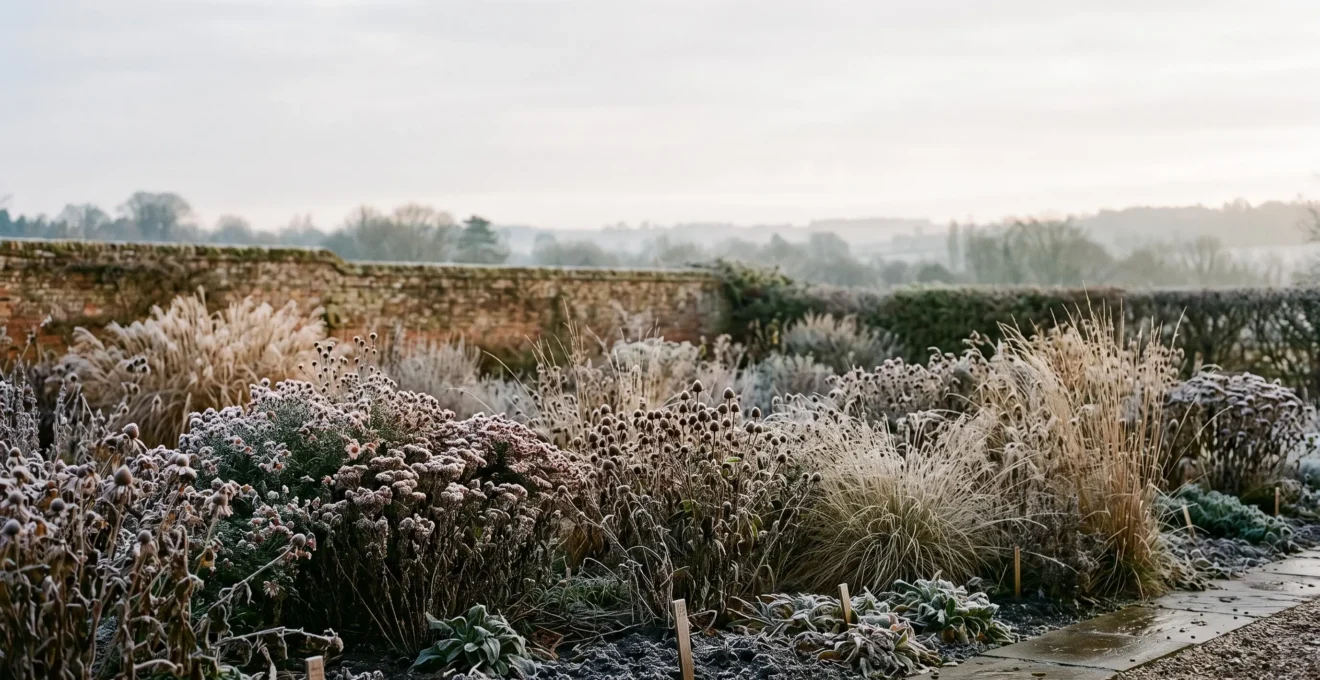
This image of a frost-covered border, left uncut, is not a sign of neglect. It’s a picture of a healthy, functioning ecosystem providing vital shelter for the wildlife that will help pollinate and protect your garden next year.
Embracing a degree of “wildness” is a strategic choice for a healthier garden. By providing this overwintering habitat, you ensure a robust population of beneficial insects is present in spring, ready to pollinate your flowers and control pests. It transforms a simple gardening practice into a powerful act of conservation that pays dividends for the entire garden’s vitality.
Ultimately, creating a garden that weathers the wet British winter is about working with nature, not against it. It requires a shift in perspective—from seeing dead foliage as a mess to recognizing it as an energy source and a natural blanket. By focusing on the long-term health of the soil and the root systems within it, you are making the most valuable investment possible. This approach not only saves you the cost and frustration of replacing dead plants but also builds a richer, more resilient, and more vibrant garden ecosystem. Start implementing these strategies today to ensure your perennials don’t just survive, but thrive for years to come.