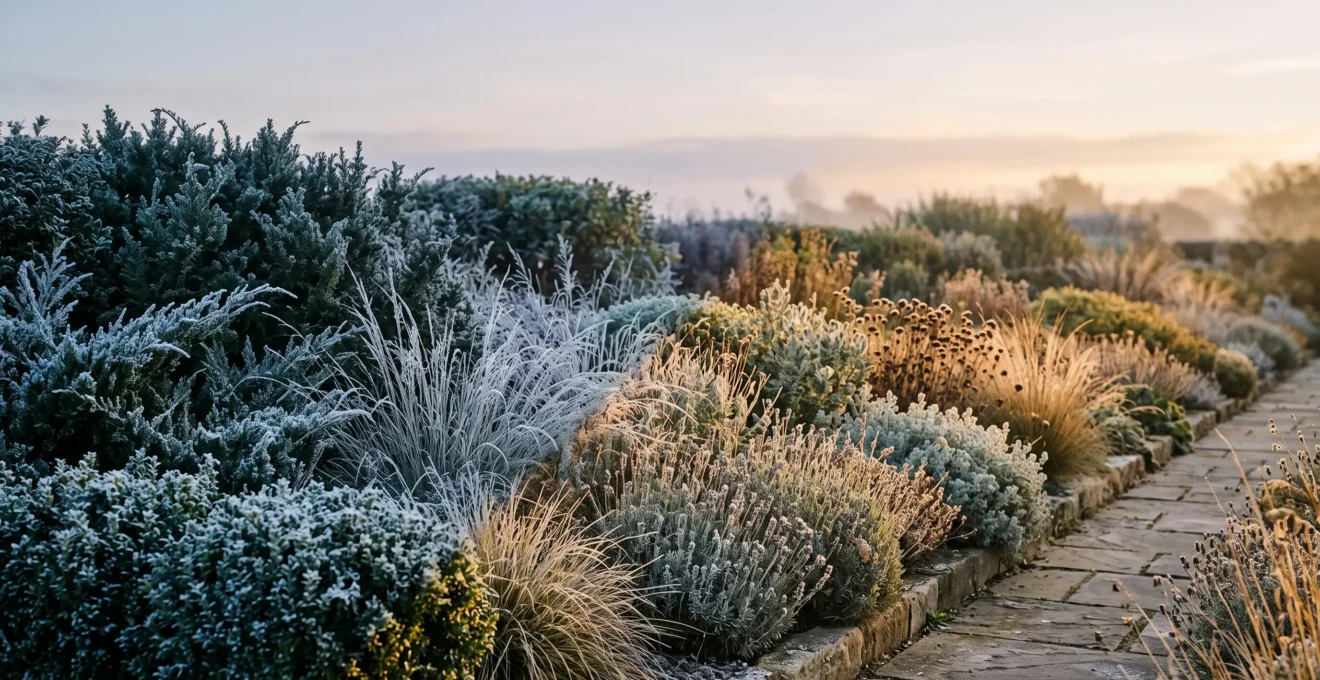
Contrary to popular belief, adapting your garden to climate change isn’t just about choosing drought-tolerant plants; it’s about re-engineering your entire garden’s ecosystem to anticipate instability.
- Milder winters disrupt the natural balance between pests and their predators, creating new challenges.
- Earlier springs increase the risk of devastating late frosts by waking plants up before the danger has passed.
Recommendation: Shift your mindset from a collector of plants to a designer of resilient systems, focusing on water management, biodiversity, and microclimate control.
If you are a long-term gardener, you have likely felt it in your bones. The rhythm of the seasons feels different. Plants once considered tender are inexplicably surviving UK winters, while old reliables struggle with new pressures. This isn’t just anecdotal; it’s a tangible symptom of our shifting climate. For decades, gardeners have relied on frameworks like the Royal Horticultural Society (RHS) hardiness zones to guide their planting choices, providing a reliable map of what will survive where. But what happens when the map itself becomes outdated?
The common response is to seek out lists of drought-tolerant plants or install a larger water butt. While not wrong, these are merely tactical fixes to a deeply systemic problem. The subtle, non-linear effects of climate change are altering the very web of life in our gardens. Pests are behaving differently, rainfall is becoming more erratic, and the very concept of a ‘typical’ spring is dissolving. Relying on the old rulebook is becoming an exercise in frustration, leading to plant losses and wasted effort.
But what if the true key to a thriving garden lies not in finding tougher individual plants, but in fundamentally rethinking the garden as a resilient, interconnected ecosystem? This requires a new perspective: moving from being a gardener to being a garden ecosystem designer. It means understanding the ‘why’ behind the changes—the ecological mismatches, the failure of plant acclimation, and the physics of microclimates. By grasping these underlying principles, we can create gardens that don’t just survive, but are designed to absorb and buffer against the shocks of a more unpredictable future.
This article will explore the core challenges presented by our changing climate and provide a strategic framework for designing true resilience. We will dissect the new realities of pest control, plant selection, water management, and more, empowering you to build a garden that is ready for what lies ahead.
Summary: The Gardener’s New Rulebook for a Changing Climate
- Why pests no longer die off in winter and what to do?
- Plants for 2030: selecting species for hotter, drier summers
- The late frost danger: why earlier springs are more destructive?
- Tanks or ponds: storing water for the ‘new normal’ rainfall patterns
- When to prune in a year without a real winter?
- The monoculture risk: why diversity is your insurance policy?
- How to position windbreaks without creating damaging turbulence?
- Designing for climate resilience: gardens that survive flood and drought
Why pests no longer die off in winter and what to do?
The notion that a “good, hard frost” will cleanse the garden of pests is a deeply ingrained piece of horticultural wisdom. However, as UK winters become milder and more erratic, this natural reset button is failing. Many gardeners are observing that pest populations, such as aphids and slugs, seem to explode at the first sign of spring. This isn’t just because fewer pests are dying in the cold; it’s a more complex issue of ecological mismatch. Predators like ladybirds and lacewings, which naturally control pest numbers, have their own specific temperature cues for emerging from hibernation. When a mild winter allows pests to remain active or emerge early, their predators may still be dormant, giving the pests a crucial head start.
This dynamic is supported by recent research. For example, a 2023 modelling study found that as climates become warmer and more seasonal, the ability of predators to control prey populations generally decreases relative to the direct effect of the climate itself. Furthermore, the RHS has noted that a series of mild winters has allowed many ‘new’ species to establish themselves in Britain. According to their research, many of these have become established in the past 15 years and have begun to spread, creating novel challenges for which our garden ecosystems are unprepared.
To combat this, gardeners must shift from reactive spraying to proactive ecosystem support. The goal is to build a garden that is less hospitable to pests and more welcoming to their predators. This involves creating year-round habitats for beneficial insects, such as log piles, insect hotels, and leaving some hollow stems standing over winter. Increasing plant diversity also plays a crucial role, as a varied planting scheme can confuse pests searching for their host plant and provide a wider range of food sources for beneficial species. It means accepting a little “untidiness” as a vital component of a resilient, self-regulating garden.
Plants for 2030: selecting species for hotter, drier summers
The default advice for a hotter, drier climate is to plant Mediterranean species like Lavender, Salvia, and Cistus. While these are excellent choices, a truly forward-thinking approach must go deeper than just species selection. As a climate researcher, the most exciting frontier is in provenance-led selection. ‘Provenance’ refers to the specific geographic origin of a plant’s parent stock. Two trees of the same species—one from a cool, wet Scottish glen and another from a warmer, drier region of France—can have profoundly different genetic adaptations to climate.
The future of resilient planting is not just about choosing the right species, but choosing the right genetic variant of that species. We must look to “climate analogue” regions—areas that today experience the climate predicted for the UK in coming decades—and source our plants from there. This concept of “assisted migration” is gaining significant traction in forestry and conservation. For instance, a long-term experiment on Scots pine confirms that a tree’s drought response is more heavily influenced by its climate of origin (provenance) than by other factors. Trees from southern, drier provenances consistently show superior resilience.
This principle is directly applicable to our gardens. When buying a tree or shrub, it is worth asking the nursery about the provenance of their stock. Specialist nurseries are increasingly aware of this and may be able to provide plants grown from seed collected in more southerly or continental climates. For long-term investments like trees, selecting a southern European provenance of a species like *Quercus robur* (English Oak) over a UK-sourced one could be the difference between a tree that struggles and one that thrives in the climate of 2050. It’s a strategic shift from hoping a plant will adapt to choosing one that already has.
The late frost danger: why earlier springs are more destructive?
One of the cruelest paradoxes of a warming climate is the increased risk of catastrophic frost damage. Common sense suggests that warmer winters should mean less frost, but the reality is more dangerous. Warmer temperatures in late winter and early spring are sending a false signal to plants, breaking their dormancy and encouraging them to produce tender new leaves and flower buds weeks ahead of schedule. While the average last frost date is getting earlier, the climate’s increased instability means that a sudden, sharp, late frost event is still highly probable. This creates a devastating scenario of acclimation failure.
A plant that is fully dormant can withstand deep cold. But once it has de-acclimated and pushed out vulnerable new growth, even a light frost can be fatal to that year’s flowers, fruit, and foliage. This phenomenon of “false springs” is a growing threat across the temperate world. For example, a 2007 false spring caused an estimated $2 billion in agricultural crop losses in the central and eastern USA. This is not a distant problem; as European springs advance, so does this specific vulnerability. As the specialists at Nourse Farms note:
As our climate continues to change, winters are becoming less predictable, and with that unpredictability comes an increased risk of ‘false springs.’
– Nourse Farms, False Springs – Nourse Farms Blog
For gardeners, this means vigilance is the new norm. Protecting vulnerable plants like magnolias, fruit trees, and hydrangeas with horticultural fleece during predicted cold snaps is no longer an occasional task but a critical part of spring gardening. Site selection is also key; avoid planting early-flowering, frost-sensitive species in “frost pockets” at the bottom of slopes where cold air settles. We must learn to decouple our expectations of spring from the calendar and instead watch the weather forecast with a new level of scrutiny.
Tanks or ponds: storing water for the ‘new normal’ rainfall patterns
Climate change in the UK doesn’t necessarily mean less rain overall, but rather a change in its pattern: longer dry spells punctuated by more intense, heavy downpours. The standard water butt, while useful, is often quickly overwhelmed by a deluge and then rapidly depleted in a drought. To build true water resilience, we need to think at a larger, more integrated scale. This is where we move from simple water collection to strategic microclimate engineering, with the garden pond as a central tool.
A pond is far more than just a reservoir. It is a dynamic system that actively moderates its immediate environment. The large surface area of a pond increases local humidity through evaporation, providing a subtle but crucial buffer for surrounding plants during dry, hot weather. This creates a cooler, more humid microclimate that can reduce the transpiration stress on nearby plantings. The visual below captures this effect, where the pond acts as a cooling, stabilising presence in the landscape.
Furthermore, a well-designed pond system can be part of an integrated drainage solution. By directing overflow from roofs and hard surfaces into a pond or a connected bog garden, you can capture and slow the release of storm water. This recharges local groundwater, prevents soil erosion, and stores the intense rainfall for later use by the surrounding ecosystem. This approach treats water not as a resource to be simply stored in a plastic tank, but as a dynamic element to be managed and integrated throughout the garden, building systemic resilience from the ground up.
When to prune in a year without a real winter?
“Prune roses in February.” “Prune wisteria after flowering.” These calendar-based rules have guided gardeners for generations. However, in a year with no significant frost and fluctuating temperatures, these rigid timelines are becoming increasingly unreliable and potentially harmful. Pruning at the wrong time—for instance, during a mild spell in January—can stimulate a plant to produce soft, vulnerable new growth that is then decimated by a subsequent cold snap. The old calendar is no longer a safe guide.
The key to modern pruning is to ignore the calendar and instead learn to read the plant’s signals of dormancy. True dormancy is a state of metabolic shutdown triggered by a combination of decreasing day length and sustained cold. In our new climate, many plants may not enter a deep, protective dormancy at all. As the RHS found in a survey on winter damage, the problem is often not the cold itself but the lack of preparation. They state that much of the damage seen after a brutal winter likely resulted from the lack of acclimation, the process by which plants adjust to environmental changes like cold.
So, when should you prune? The new rule is to prune when the plant is at its most dormant, regardless of what the calendar says. For many deciduous shrubs and trees, the safest time is now late winter, just before bud-break is visible but after the worst risk of extreme cold has passed. Look for hard, tight buds as a sign of dormancy. Avoid pruning during unseasonable warm spells in mid-winter. For more tender shrubs, it’s often safer to wait until early spring when new growth has begun, so you can clearly see and remove any wood that was damaged by winter cold. This shift requires more observation but results in healthier, more resilient plants.
The monoculture risk: why diversity is your insurance policy?
In garden design, we often create monocultures without realizing it. A perfect, uniform lawn is a monoculture. A long hedge composed of a single species like Leylandii or Beech is a monoculture. While aesthetically pleasing to some, these swathes of genetic uniformity represent a significant risk in a changing climate. If a new pest or disease arrives to which that one species is susceptible, the entire feature can be wiped out. If a specific weather event like a late frost or a summer scorch targets that species’ weakness, the damage can be total.
Biodiversity is the best insurance policy a gardener can have. A mixed planting, or polyculture, is inherently more resilient. Pests find it harder to locate their target plant when it is surrounded by other species. A weather event that damages one plant may leave its neighbours untouched. This interlocking web of different species, with different root depths, leaf textures, and seasonal timings, creates a robust and stable system. The image below illustrates this concept at a micro level, showing how varied forms and textures can combine to create a dense, living fabric.
Implementing this in your garden means consciously breaking up monocultures. Instead of a single-species hedge, consider a mixed native hedge containing hawthorn, blackthorn, hazel, and field maple. This not only spreads risk but also provides a vastly richer habitat for wildlife. In your borders, aim for a tapestry of perennials, grasses, shrubs, and self-seeders. The goal is to create layers of diversity in form, function, and origin. This systemic resilience ensures that no single point of failure can bring down the entire system, making your garden a more robust and adaptable entity in the face of uncertainty.
How to position windbreaks without creating damaging turbulence?
Protecting a garden from damaging winds seems straightforward: build a solid wall or plant a dense hedge. However, this often makes the problem worse. A solid barrier doesn’t eliminate wind; it deflects it. As the wind flows up and over the barrier, it creates powerful, damaging eddies and turbulence on the leeward (sheltered) side. This can be more destructive to plants than the original, steady wind, causing snapped stems and windburn. This is a classic example of where a brute-force solution fails to account for the underlying physics.
The key to effective wind protection is not blocking the wind, but filtering and slowing it. The ideal windbreak should be approximately 50% permeable, allowing some air to pass through it. This breaks up the force of the wind, gently slowing it down and depositing it over a much larger area, creating a zone of relative calm without the violent turbulence. This can be achieved with a hedge that is not clipped into a solid wall, a slatted fence, or a row of trees with space between them. The visual metaphor below shows how a permeable structure allows airflow to be managed rather than fought against.
A well-placed, semi-permeable windbreak is a powerful tool of microclimate engineering. It can reduce water loss from plants (desiccation), raise ambient temperatures in its shelter, and allow more delicate plants to thrive. The rule of thumb is that a windbreak provides effective shelter for a distance of up to ten times its height. By understanding and applying the principle of permeability, you can transform wind from a destructive force into a managed element of a calm, resilient, and more productive garden environment.
Key takeaways
- Climate instability is making calendar-based gardening obsolete; observation of plant and weather signals is now critical.
- True garden resilience comes from designing an interconnected ecosystem, not just selecting individual “tough” plants.
- Managing water, wind, and biodiversity are systemic actions that provide a buffer against unpredictable weather extremes.
Designing for climate resilience: gardens that survive flood and drought
We have explored the specific challenges—the new pest dynamics, the paradox of late frosts, and the limits of calendar-based gardening. The common thread is that our gardens are complex systems, and a changing climate is pulling at every part of that system simultaneously. Designing for true resilience, therefore, is not a checklist of tasks but a fundamental shift in mindset. It is the conscious move from being a plant curator to an ecosystem architect, creating a garden that can survive the dual threats of flood and drought.
This means integrating the principles we’ve discussed into a unified strategy. It means selecting plants based on provenance, not just species, to build in genetic resilience. It means creating polycultures and mixed hedges that act as an insurance policy against unpredictable pest and disease outbreaks. It means engineering microclimates with permeable windbreaks and ponds that moderate temperature and humidity. Every design choice should be evaluated through the lens of resilience: does this build a buffer against extremes? Does it enhance the garden’s ability to self-regulate?
For example, instead of a flat lawn, a resilient design might incorporate shallow swales or rain gardens—depressions that capture heavy rainfall, allowing it to soak into the ground slowly rather than running off. This hydrates the subsoil for drought periods and prevents waterlogging during deluges. It is a single design feature that addresses both flood and drought. This is the essence of systemic resilience: creating elements that serve multiple functions to stabilise the whole.
Action plan: your garden resilience audit
- Water Flow Analysis: Observe where rain flows and pools in your garden during a downpour. Identify opportunities to slow and sink this water using swales, ponds, or rain gardens instead of letting it run off.
- Monoculture Inventory: List all areas of your garden with only one species (e.g., a lawn, a single-species hedge, a mass planting of one perennial). Brainstorm how to introduce at least two other species to each area.
- Microclimate Mapping: Identify the hottest, driest, windiest, and most frost-prone spots in your garden. Plan one structural change (e.g., a permeable screen, a small tree, a pond) to moderate one of these extremes.
- Habitat Check: Locate all existing habitats for beneficial wildlife (log piles, mature trees, ponds, “untidy” corners). If you have fewer than three, plan to add a new one this season.
- Provenance Research: For your next major plant purchase (especially a tree or large shrub), contact two specialist nurseries to ask about the provenance of their stock, specifically seeking plants from a climate slightly warmer and drier than your own.
Adopting this mindset is the single most powerful step you can take. It transforms gardening from a battle against the elements into a collaborative partnership with nature, creating a beautiful, thriving, and enduring space ready for the climate of tomorrow.