The secret to connecting with your teen isn’t finding the ‘perfect’ activity, but co-designing the ‘system’ of the tradition itself, giving them a sense of ownership and purpose.
- Predictable rituals are a powerful tool to reduce adolescent anxiety by creating a stable, safe anchor in their rapidly changing world.
- Evolving a tradition as your teen matures isn’t a sign of failure; it’s a critical step that shows you respect their growth and keeps them engaged.
Recommendation: Shift your mindset from « planner » to « co-designer. » Introduce a simple, low-stakes tradition and immediately invite your teen to help shape its rules, purpose, and future evolution.
The empty chair at the Sunday breakfast table. The closed bedroom door that seems to have a stronger gravitational pull than the rest of the house. For many British parents, the weekend landscape shifts dramatically when children become teenagers. The once-eager participants in family outings are replaced by adolescents navigating a complex new world of social pressures, academic demands, and a deep, biological need for autonomy. The standard advice often feels hollow: another forced « family movie night » is met with an eye-roll, and « game night » feels more like a hostage situation than a bonding experience.
We often try to solve the problem with bigger, better, or more exciting activities, assuming the issue lies with the ‘what’. We might even explore related ideas, like decorating their room to be more inviting or finding new hobbies they can do alone. But what if the conventional wisdom is looking through the wrong end of the telescope? What if the key to re-engaging your teen isn’t in planning the perfect activity *for* them, but in designing a meaningful ritual *with* them? This isn’t about finding a one-off event they’ll tolerate; it’s about building a predictable, comforting, and evolving system that they feel a sense of ownership over.
This guide moves beyond the generic advice. We will explore the science of why rituals soothe adolescent anxiety, provide a concrete budget-friendly starting point, and differentiate between a chore-like routine and a soul-feeding tradition. By understanding how to design, protect, and evolve these shared moments, you will learn to create a framework for connection that not only withstands the teenage years but strengthens your family bond for a lifetime, building a portfolio of core memories that become the stories they tell for years to come.
To help you navigate this journey from planner to co-designer, we’ve structured this guide to build from foundational principles to practical application. The following sections will equip you with the insights and tools needed to transform your family’s weekends.
Summary: How to Build Lasting Weekend Rituals with Your Teen
- Why Do Predictable Rituals Reduce Anxiety in Children?
- How to Plan a « Pancake Sunday » for Under £10?
- Routine or Tradition: What Is the Difference and Why Does It Matter?
- The Flaking Mistake: Why Cancelling Traditions Damages Trust
- When to Evolve the Tradition: Keeping Teens Engaged as They Age
- When to Schedule Family Game Night for Maximum Engagement?
- How to Use « Yes Days » to Create Spontaneous Joy?
- Creating Core Memories: How to Design Moments That Last a Lifetime?
Why Do Predictable Rituals Reduce Anxiety in Children?
The teenage brain is a whirlwind of development, social navigation, and identity formation. In this constant state of flux, the world can feel overwhelming and unpredictable. It’s no surprise that recent mental health data reveals that between 18-20% of adolescents aged 12-17 are diagnosed with anxiety disorders. In this context, a predictable family ritual isn’t just a nice activity; it’s a powerful psychological anchor. It creates a pocket of certainty in an uncertain world. Knowing that, no matter what happens at school or with friends, Sunday morning means a specific, shared experience provides a profound sense of safety and stability.
This concept is what we can call purposeful predictability. It’s not about rigid, boring repetition. It’s about creating a reliable container within which spontaneous connection and authentic emotions can safely emerge. When a teen doesn’t have to guess the ‘rules’ or worry about the outcome, their cognitive and emotional resources are freed up. They can relax, be present, and genuinely connect. A simple, recurring act—like tending to a small garden plot together—becomes a non-verbal way of saying, « This is our time. This space is safe. You are grounded here. »
The ritual provides a low-pressure environment for communication. The focus is on the shared task, not on a direct, potentially confrontational conversation. It’s during these side-by-side moments of pulling weeds or watering plants that a teen is often most likely to open up about their day, their worries, or their triumphs. The predictability of the ritual itself creates the space for the unpredictability of genuine human connection.
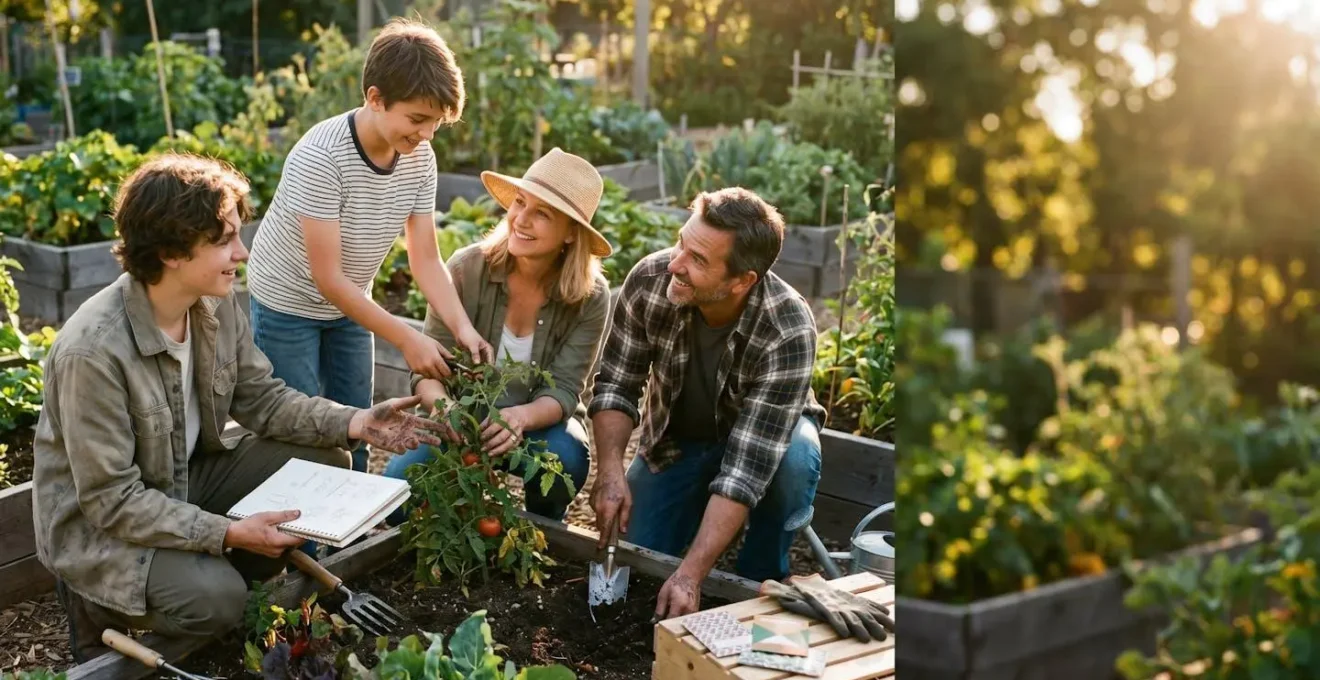
As you can see in the simple act of planting a seedling, the focus is on a shared, tangible goal. This tactile experience grounds a teen in the present moment, pulling them away from the digital world and the anxieties of the future. The ritual becomes a multi-sensory experience that reinforces feelings of competence, care, and continuity. It’s a living metaphor for nurturing growth, both in the garden and within the family.
How to Plan a « Pancake Sunday » for Under £10?
The idea of starting a new tradition can feel daunting, often associated with significant time, effort, and expense. This is a trap. The most resilient and beloved traditions are often the simplest and most accessible. The goal isn’t to create a Michelin-star experience but a moment of reliable warmth and connection. A « Pancake Sunday » is a perfect case study in starting small, a principle that is key to long-term success. The low financial barrier (well under £10 for flour, eggs, milk, and a simple topping) removes a major source of stress and excuses for not following through.
The key to making it work is to shift the focus from the ‘product’ (perfect pancakes) to the ‘process’ (the ritual itself). This is where co-ownership begins. Don’t just present a plate of pancakes. Involve your teen in the micro-decisions. Is it their job to mix the batter? Are they in charge of the music playlist? Do they get to choose a ‘guest topping’ each week? By giving them a specific, respected role, you transform them from a passive consumer into an active co-creator. Their investment in the tradition grows exponentially.
As a leading parenting expert advises, the initial steps are crucial for embedding a new tradition into family life. This wisdom underscores the importance of accessibility and ease.
When choosing a family tradition, it’s best to start small. Choose something that can be integrated easily into your routine, and don’t force it.
– Parent.com nature parenting expert, 20 Family Traditions That Will Teach Your Kids To Love Nature
This advice is the antidote to overly ambitious plans that collapse under their own weight. A pancake breakfast that happens 80% of the time is infinitely more valuable than a grand brunch plan that never gets off the ground. The beauty of the £10 pancake tradition is its resilience. It’s weatherproof, requires minimal planning, and provides a perfect, low-stakes canvas for conversation and connection to happen naturally.
Routine or Tradition: What Is the Difference and Why Does It Matter?
We often use the words ‘routine’ and ‘tradition’ interchangeably, but for a teenager, the difference is profound. A routine is a task that must be done; it’s about efficiency. Think « take out the bins » or « finish your homework. » It’s often externally imposed and carries a feeling of obligation. A tradition, on the other hand, is a ritual that is chosen; it’s about connection and meaning. While it has a structure (the ‘routine’ part), its primary purpose is to reinforce identity, values, and a sense of belonging. The ‘why’ is what elevates a routine to a tradition.
For example, eating dinner together every night at 6 PM is a routine. But « Taco Tuesday, » where everyone builds their own tacos and shares their « high and low » of the day, is a tradition. The difference lies in the intentional infusion of meaning and shared experience. This distinction is critical because teens are hard-wired to resist imposed control (routines) but crave a sense of belonging and identity (traditions). When they feel a tradition is part of their family’s unique story, they are more likely to protect it. In fact, research consistently shows the positive impact of these meaningful rituals.
Case Study: The Protective Power of Family Mealtimes
A 2024 systematic review in the Journal of Family Theory & Review highlighted the significant impact of family rituals. The research found that teens who consistently participated in family routines, particularly mealtimes imbued with ritualistic connection, showed significantly lower rates of smoking, drug use, and alcohol-related problems. Crucially, the study noted that when parental issues disrupted these rituals, the risk of children developing substance abuse problems increased. This demonstrates that the tradition itself acts as a powerful protective factor, creating a buffer against external risks and internal stresses.
This evidence is a powerful reminder that traditions are not frivolous extras; they are a core component of a healthy family ecosystem. They provide the narrative and symbolic framework that helps adolescents make sense of their world and their place within the family. A 2024 study examining adolescent development found that family rituals are positively correlated with perceived parental support and the quality of a teen’s friendships, suggesting the benefits ripple out into their social lives. A routine says, « this is what we do. » A tradition says, « this is who we are. »
The Flaking Mistake: Why Cancelling Traditions Damages Trust
Life is busy. A last-minute work demand, a conflicting appointment, or sheer exhaustion can make it tempting to cancel a planned family tradition. From a parent’s perspective, it might seem like a small, practical concession. « We’ll just do it next week. » But from a teenager’s perspective, especially one who has tentatively bought into the idea, a cancellation can feel like a betrayal. It sends a clear message: this « special time » is, in fact, the most disposable thing on the schedule. It erodes the very predictability and safety the ritual is meant to build.
This is the ‘flaking mistake’. Each time you cancel, you chip away at the foundation of trust. The teen learns that your word is conditional and that the family unit’s commitments are secondary to external pressures. For an adolescent who is constantly observing and testing the integrity of the world around them, this inconsistency is deeply unsettling. It teaches them that it’s not safe to be vulnerable or to invest emotionally in the tradition, because it can be taken away without warning. It validates their cynical, self-protective instincts to retreat back to their room, where their world is more controllable.
Protecting the tradition, even when it’s inconvenient, is a powerful act of love. It demonstrates that the family’s connection is a priority. It’s not about being rigid; it’s about being reliable. If a cancellation is truly unavoidable, the way it’s handled is crucial. It shouldn’t be a casual text message. It requires a « family meeting, » an explanation, and most importantly, the immediate co-scheduling of a ‘make-up’ session, with the teen having a say in when that happens. This act of ‘ritual repair’ shows respect for the tradition and for the teen’s feelings, mitigating the damage and reinforcing that the connection—not just the activity—is what truly matters.
Even small, consistent moments of connection can serve as a buffer against life’s larger stresses. As researchers on family well-being note, the communication around these rituals is a powerful tool. They found that family ritual communication can mitigate the negative effects of parental stress on a child’s psychological health. Cancelling a tradition is the opposite of this; it can amplify stress by removing a key coping mechanism.
When to Evolve the Tradition: Keeping Teens Engaged as They Age
A tradition that was perfect for a 12-year-old can feel cringeworthy to a 16-year-old. One of the biggest mistakes parents make is clinging to the original form of a tradition long after their child has outgrown it. They see the teen’s withdrawal as a rejection of the family, rather than a rejection of an activity that no longer fits their developmental stage. The key to long-term success is not to preserve the tradition in amber, but to see it as a living organism that must evolve alongside your teen. This is the ultimate expression of co-ownership and respect.
The moment you sense disengagement is not a time for lectures; it’s a time for a « promotion. » Frame it as an evolutionary milestone. Sit down with your teen and say, « You know, we’ve been doing Pancake Sunday for years. You’re older now, and I think you’re ready to take it to the next level. What’s the 2.0 version of this look like? » This approach validates their maturity, honours their changing identity, and invites them to become the architect of the tradition’s next chapter. Maybe Pancake Sunday becomes « Brunch Club, » where they can invite a friend. Maybe the annual camping trip evolves into a more challenging hike that they get to plan.
The goal is to shift responsibility and creative control to them incrementally. A gardening tradition might start with simply watering plants, but it can evolve into a project that gives them genuine autonomy and a sense of purpose. This process of intentional evolution keeps the tradition alive, relevant, and engaging through the tumultuous teenage years.
Notice how the focus shifts from a shared, parent-led activity to an independent, self-directed passion that is still rooted in the family context. The teen is no longer just a participant; they are the expert, the caretaker, the documentarian. This is the pinnacle of a successfully evolved tradition.
Your Action Plan: Evolving a Gardening Tradition with Your Teen
- Ages 10-12 (The Apprentice): Start with foundational projects. Introduce them to composting, showing how kitchen scraps transform into nutrient-rich soil for the garden. This teaches the ‘why’ behind the work.
- Ages 12-14 (The Propagator): Grant them the ‘magic’ of creation. Shift to plant propagation projects, letting them grow new plants from seeds or cuttings. This fosters responsibility and a deeper understanding of life cycles.
- Ages 14+ (The Designer): Hand over creative control. Transition to more challenging projects like designing an entire garden bed independently or leading a themed initiative (e.g., a « pizza garden » with tomatoes and herbs).
- Ages 15+ (The Artist): Connect the tradition to their identity. Incorporate design elements like colour theory and texture, allowing creative teens to express their personal style through plant selection and garden art.
- Ages 16+ (The Historian): Deepen the meaning. Connect gardening to cultural learning by researching and growing plants with fascinating historical origins, sparking discussions about diverse food crops and global practices.
When to Schedule Family Game Night for Maximum Engagement?
The ‘when’ of a family tradition can be just as important as the ‘what’. For teenagers, their social calendar is a fragile and fiercely protected ecosystem. Scheduling a « mandatory » family game night for 7 PM on a Saturday is often a recipe for conflict, as it directly competes with peak social time with friends. The key to successful scheduling is a combination of strategic planning and collaborative negotiation, respecting their autonomy and social needs.
First, identify the « dead zones » in the week. These are often periods with low social currency for a teen. A Sunday afternoon, for example, is often a time of winding down, homework, and preparing for the week ahead. Slotting a 90-minute tradition here is far less likely to be met with resistance than on a Friday night. Similarly, a specific weeknight immediately after dinner can sometimes work, as long as it’s consistent and doesn’t clash with major homework deadlines. The goal is to find a slot that feels like a natural part of the weekly rhythm, not an intrusion.
Second, and most importantly, make scheduling a collaborative process. Don’t dictate the time; present it as a problem to be solved together. « We all agree we want to do a game night once a week. Let’s look at the calendar. What’s a time that works for everyone and that we can protect? » Give them the family calendar and a pen. This simple act of handing over control signals respect for their time and their commitments. It makes them a partner in the solution. You might be surprised to find they suggest a time you hadn’t considered, or that they are more willing to protect a time they helped choose. This turns scheduling from a power struggle into the first step of the collaborative tradition itself.
Ultimately, the best time is a protected time. Once a slot is agreed upon, it needs to be treated with the same seriousness as a doctor’s appointment or a work meeting. It goes on the calendar in permanent marker. This tells the teen that their time, and the family’s time together, is valued and non-negotiable in a way that feels secure, not authoritarian. It’s the ultimate sign of respect for them and for the tradition.
How to Use « Yes Days » to Create Spontaneous Joy?
While predictable rituals provide a crucial anchor, there’s also immense power in deliberately engineered spontaneity. This is the magic of the « Yes Day. » The concept is simple: for a designated period (a few hours, or a full day), the answer to any reasonable, safe, and budget-friendly request from your teen is « yes. » This isn’t about unchecked chaos; it’s about temporarily flipping the power dynamic and creating a space for joyful, unscripted connection. It’s a powerful antidote to the constant stream of « no’s » and negotiations that can define the parent-teen relationship.
To make a « Yes Day » successful with a teen, it needs a few ground rules established collaboratively beforehand. Define the budget, the geographical limits, and any hard-and-fast safety rules. This framework doesn’t limit the fun; it creates the safety for it to flourish. A « Green Yes Day, » for example, could focus all activities around nature. If they ask to visit a botanical garden you’ve never been to, the answer is « yes. » If they want to try and build a bug hotel in the garden from scrap wood, « yes. » If they want to make wildflower seed bombs to ‘guerrilla garden’ a neglected neighbourhood patch, « yes. »
The « Yes Day » serves several important functions. First, it gives you, the parent, a direct window into your teen’s current interests and passions. What do they choose when given free rein? You might be surprised. Second, it breaks the family out of its ruts, pushing everyone to try new things and visit new places. Third, and most importantly, it generates a huge deposit in the « emotional bank account. » The memory of a day where they were in charge, where their ideas were celebrated, and where the default answer was one of joy and acceptance, is incredibly powerful. It’s a core memory generator that can sustain the family through more challenging times.
It’s a chance to be fully present and responsive, following their lead for a change. The goal isn’t to accomplish a list of tasks, but to enjoy the journey of saying « yes » to connection, adventure, and the simple joy of being together without a pre-written script. It’s the perfect complement to the steady rhythm of your more structured traditions.
Key takeaways
- The most successful family traditions are co-designed with teens, not just planned for them, fostering a sense of ownership.
- Predictable rituals act as a psychological anchor, significantly reducing anxiety in adolescents by providing stability in a changing world.
- Evolving a tradition as a teen matures is not failure; it’s a necessary step that respects their growth and keeps them engaged.
Creating Core Memories: How to Design Moments That Last a Lifetime?
What is the ultimate goal of a family tradition? It’s not just to pass the time on a Sunday afternoon. It is the conscious and unconscious act of creating core memories. These are the vivid, emotionally resonant moments that form the bedrock of our identity and our sense of belonging. They are the stories we tell ourselves about who we are and where we come from. As parents of teenagers, we are in the business of memory architecture. Our role is to design experiences that are sticky, meaningful, and likely to be recalled with warmth years later.
So, how do you design for memory? Research suggests memories are stickiest when they involve heightened emotion, sensory detail, and a sense of novelty or significance. A tradition that engages multiple senses—the smell of pancakes, the feeling of soil on your hands, the sound of a favourite song—is more likely to be encoded deeply. A tradition that has a clear ‘peak’ moment, like harvesting the first tomato of the season, and a strong, satisfying ‘end’ is more memorable than one that just fizzles out.
Furthermore, the most powerful traditions often tap into a sense of purpose larger than the family itself. This is especially true for today’s teenagers. For instance, a nationally representative survey found that 37% of teenagers feel anxious when thinking about climate change. A tradition that involves positive environmental action, like volunteering at a local park or cultivating a pollinator garden, doesn’t just create a memory; it provides a tangible way to combat feelings of helplessness and gives the family a shared mission. This is where ritual becomes legacy.
Case Study: The Youth-Led Indigenous Garden
In Ottawa, Canada, a youth-led garden run by an Indigenous youth group provides a powerful example of legacy building. The project focuses on cultivating traditional medicines and vegetables, allowing the teens to not only gain practical skills but to connect with their cultural heritage and ancestors. By engaging in this hands-on nature project, the youth are actively participating in the continuation of their culture, turning a simple garden into a space of profound intergenerational connection and memory-making. This transforms the act of gardening from a hobby into a meaningful ritual of cultural preservation and identity.
This is the ultimate goal: to create traditions that are not only fun in the moment but also contribute to your teen’s sense of self, their connection to their family story, and their place in the world. It’s about creating a moment so rich with sensory detail and emotional meaning that it becomes a permanent, shining fixture in your family’s history.
This single image captures the essence of a core memory: multiple generations, a shared achievement, sensory detail (the warmth of the sun, the colour of the tomato), and an emotional peak. This is what we are designing for. These are the moments that last a lifetime.
By shifting your perspective from activity planner to ritual co-designer, you can transform your weekends. It starts with understanding that your teen’s withdrawal isn’t a rejection of you, but a natural quest for autonomy. By creating predictable, purposeful, and evolving traditions, you provide a safe harbour for them to navigate their turbulent world, building a foundation of trust and connection that will last far beyond the teenage years. Start small, share control, and focus on creating moments of shared meaning—the core memories will follow.